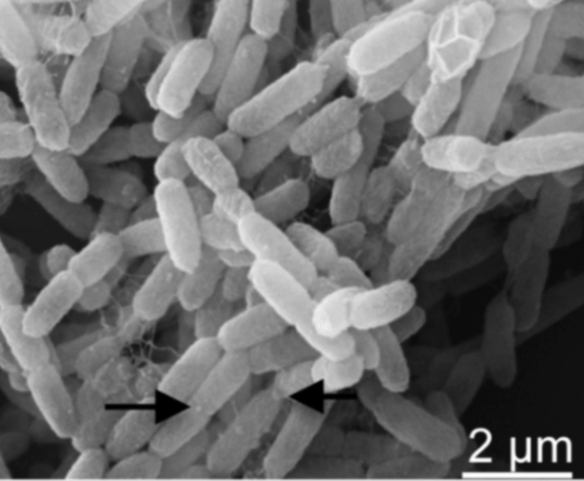
Plague: Ancient DNA of Yersinia pestis solves mystery of mass death in Justinian, rewrites pandemic history
Two studies provide new insights into one of the most consequential episodes in human history. Genomic evidence links Y. pestis to the plague of Justinian, marking the begining of the First Pandemic (AD 541-750) in the ancient city of Jerash, Jordan. Genomic evidence also shows Y. pestis was circulating in human populations for millennia even before the Justinian outbreak
For the first time, our team has uncovered direct genomic evidence of the bacterium behind the mass death of Justinian — the world’s first recorded pandemic — in the Eastern Mediterranean, where the outbreak was first described nearly 1,500 years ago.
Along with researchers from the University of South Florida, Tampa, and other international collaborators in Australia, we identified Yersinia pestis, the microbe that caused mass death, in a burial in the ancient city of Jerash, Jordan, near the pandemic’s epicentre. The find definitively links the pathogen to the Justinian Plague marking the first pandemic (AD 541-750), resolving one of history’s long-standing mysteries.
For centuries, historians have deliberated on what caused the devastating outbreak that killed tens of millions, reshaped the Byzantine Empire, and altered the course of Western civilization. Despite circumstantial evidence, direct proof of the responsible microbe had remained elusive — a missing link in the story of pandemics.
Genomic evidence links Y. pestis to the First Pandemic
In two recently published papers we offer new insights into one of the most consequential episodes in human history. The paper published in the journal Genes, which provides genomic evidence that links Y. pestis to the First Pandemic in the ancient city of Jerash, Jordan, also underscores plague’s ongoing relevance today: while rare, Y. pestis continues to circulate worldwide. In July, a resident of northern Arizona died from pneumonic plague, the most lethal form of Y. pestis infection, marking the first such fatality in the U.S. since 2007, and on August 19, 2025 another individual in California tested positive for the disease.
The Plague of Justinian first appeared in the historical record in Pelusium (present day Tell el-Farama) in Egypt before spreading throughout the Eastern Roman, or Byzantine, Empire. While traces of Y. pestis had previously been recovered thousands of miles away in small western European villages, no evidence had ever been found within the empire itself or near the heart of the pandemic.
The arena had been repurposed as a mass grave during the mid-sixth to early seventh century, when written accounts describe a sudden wave of mortality.
Detailed genomic analysis of hundreds of samples revealed that the plague victims carried nearly identical strains of Y. pestis, confirming for the first time that the bacterium was present within the Byzantine Empire between AD 550-660. That genetic uniformity suggests a rapid, devastating outbreak consistent with historical descriptions of a plague causing mass death.
Difficult bacterium to analyse
The bacterium was one of the most difficult to analyse, especially so because of the sparse nature of the data. In addition, the ancient DNA required special types of workflows, making it more prone to error. It took two long years for two bright students Subhajeet Dutta and Aditya Upadhyay, who are coauthors of the paper, to analyse the data at CSIR-IICB. It was one of the most difficult and time-consuming data analysis that we have handled so far.
The Jerash site offers a rare glimpse of how ancient societies responded to public health disasters. Jerash was one of the key cities of the Eastern Roman Empire, a documented trade hub with magnificent structures. Co-investigator Rays H. Y. Jiang from University of South Florida, Tampa says that a venue once built for entertainment and civic pride became a mass cemetery in a time of emergency shows how urban centres were very likely overwhelmed.
Circulating among humans prior to Justinian outbreak
A companion study published in the journal Pathogens, also led by University of South Florida (USF) and CSIR-IICB, places the Jerash discovery into a wider evolutionary context. By analysing hundreds of ancient and modern Y. pestis genomes — including those newly recovered from Jerash — we found the bacteria circulating among human populations for millennia even before the Justinian outbreak.
We also found that later plague pandemics, from the Black Death of the 14th century to cases still appearing today, did not descend from a single ancestral strain. Instead, they arose independently and repeatedly from longstanding animal reservoirs, erupting in multiple waves across different regions and eras. This repeated pattern stands in stark contrast to the SARS-CoV-2 pandemic (COVID-19), which originated from a single spillover event and evolved primarily through human-to-human transmission.
Together, the findings reshape our understanding of how pandemics emerge, recur and spread, and why they remain a persistent feature of human civilization. The research underscores that pandemics are not singular historical catastrophes, but repeating biological events driven by human congregation, mobility and environmental change — themes that remain relevant today.
Studying human history through the lens of ancient DNA
Gregory O’Corry-Crowe from Florida Atlantic University considers the research as scientifically compelling and personally resonant. For the first time, the research offered an extraordinary opportunity to delve into the study of human history through the lens of ancient DNA while living through a global pandemic. Also, the experience of working with ancient human remains — individuals who lived, suffered, and died centuries ago — and using modern science to help recover and share their stories was profound, feels O’Corry-Crowe. A humbling reminder of our shared humanity across time and a moving testament to the power of science to give voice to those long silent.
While very different from COVID-19, both diseases highlight the enduring link between connectivity and pandemic risk, as well as the reality that some pathogens can never be fully eradicated.
People have been wrestling with plague for a few thousand years and the bacteria continues to spread and kill people even today, much like how COVID-19 continues to evolve. Containment measures can only go so far and evidently can’t get rid of the pathogen completely. The threat that pathogens pose will never go away.
Building on the Jerash breakthrough, the team is now expanding its research to Venice, Italy and the Lazzaretto Vecchio, a dedicated quarantine island and one the world’s most significant plague burial sites. More than 1,200 samples from this Black Death-era mass grave are now housed at University of South Florida, offering an unprecedented opportunity to study how early public health measures intersected with pathogen evolution, urban vulnerability and cultural memory.
Featured image credit: Justin Eddy, Lindsay Gielda, et al