Counting Hours: Why Policing Students Will Not Lead To Productivity
The decision by the Chair of the Department of Electronic Systems Engineering at IISc to police students using RFID is the worst thing one can do to creative people. This is meant for prisoners, not for researchers. Most people in the scientific profession are self-motivated and do not need policing to be creative
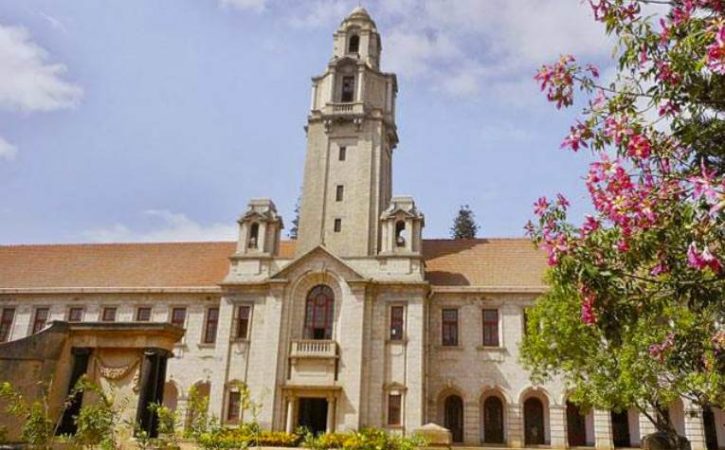
A new attendance policy that has come into force from November 1 in the Department of Electronic Systems Engineering (ESE) at the Indian Institute of Science (IISc), Bangalore, a prestigious research institution, has stirred a lot of controversy. The new attendance policy for students and staff requires permanent and contractual staff login 40 hours a week excluding lunch break, M.Tech and first year PhD scholars login 50 hours a week and senior PhD scholars 70-80 hours. The policy is however silent about the working hours for faculty.
According to the Hindustan Times, the mandatory hours for MTech and PhD students per week are counted by their presence in “department labs” as monitored by “Radio-Frequency Identification (RFID)-based access cards and facial recognition devices installed at department entry points to monitor lab hours”. As per the news report, only the hours spent in department labs would be counted, which would mean that time spent in library, in labs/facilities within or outside IISc will not be taken into account. This one singular condition by itself makes the mandatory weekly hours appear to be an extremely ill-thought-out decision.
According to the news report, the policy was communicated by the Department Chair Prof. Mayank Shrivastava in an email. As per the report, the note by Prof. Mayank Shrivastava says: “Our recent analysis clearly indicates that accountability among students has been lacking. A majority are not visiting the department during afternoon hours, and our laboratories are often found empty by evening…In a research environment like ours, such disengagement is not sustainable.”
Better monitoring mechanisms
There are a number of ways to monitor students’ progress. Some supervisors conduct weekly or fortnightly or sometimes monthly meeting of all the students on a designated day. The students present their work before everyone. Suggestions and criticisms are taken from everyone in a cordial atmosphere and the progress is assessed and students are advised accordingly. This is the most effective way of addressing the progress the student makes rather than looking into the log book to find out the number of hours spent in the lab. In the case of PhD students, we have the Doctoral Committee (DC) to assess the progress of the work and the committee usually includes faculties from other departments. Such committees meet at least once in a year to take stock of the situation and provide necessary directions to the student. We could as well increase the frequency of the Doctoral Committee assessment to monitor the progress if that would be more effective in tracking students’ progress. Finally, for the doctoral scholars, there are pre-submission seminars where the work is assessed to be sufficient or not before the thesis is submitted. In other words, there are a number of ways to assess the progress of the student rather than counting the number of hours spent in the lab.
The students are appalled by this decision of the departmental Chair. The Students Council had submitted a petition to IISc director demanding the withdrawal of the policy, saying that new policy that requires working 14-16 hours every day would leave no time for rest or social life and “could lead to a rise in suicides”. This is clear case of misuse of power by the Chair. He has overstepped his authority to make such demands, especially from students and research scholars. The students’ view assumes importance especially when student suicides in elite institutions such as IITs have generated a lot of discussion in the media and even the Supreme Court has appointed a multi-disciplinary task force headed by a retired judge Ravindra Bhat to analyse and suggest measures to prevent suicides on campuses.
Far-reaching repercussions
The report in the Hindustan Times also says: “Students now fear the new attendance process may extend institute-wide, after IISc on October 9 floated a tender for 7,000 access cards.” There is a hidden danger here. IISc being one of the premier institutions in research, there is every possibility that other institutions may follow suit. The replication of the ‘IISc model’ of policing the student will have far-reaching repercussions for India’s research ecosystem.
This raises a pertinent question. How will the work carried out in the field, as in the case of students undertaking ecology research, be monitored? How the Institute is going to monitor the number of hours spent? It can only be surmised that the Chair of the Centre for Ecological Sciences will not implement the attendance policy for MTech and PhD students.
Transplanting corporate culture to academia
The idea of long working hours, such as a 70-hour workweek, was first proposed by Infosys Co-Founder Narayana Murthy, which was endorsed by industry moguls like Sajjan Jindal, Anand Mahindra, and TV Mohandas Pai. For them, the long hours spent working meant ambition in action. Software companies are notorious for exploiting the young workforce by making them overwork with disproportionate compensations. There is something called work-life balance, which is unheard of in the software sweatshops. Now, this corporate culture of working long work hours has invaded the academic landscape at IISc, Bangalore, one of India’s most prestigious research institutes.
Students, including PhD scholars, who get into elite institutions are highly motivated individuals with great passion for learning and research. Often, they push the boundaries by working long hours in the library and the laboratory on their own volition. There is no need to police them and by doing so, the department is actually insulting their intelligence, integrity, creativity and the will to excel.
Research: An intellectual exercise
Research, unlike industrial production is a deeply intellectual exercise that requires freedom to think, reflect, experiment, and explore. Research output is not directly proportional to the number of hours a researcher spends in his laboratory. Sometimes, as I have personally experienced, it requires days of reading, thinking, reflecting and planning a new experiment. In other words, research is not a routine 9 to 5 job.
This is the most arbitrary and ill-thought-out decision by the Chair of the Department of Electronic Systems Engineering; it should, hopefully, not be replicated by other departments. Policing students using RFID is the worst thing one can do to creative people. This is meant for prisoners, not for researchers. Most people in the scientific profession are self-motivated and do not need policing to be creative. If RFID is implemented for students (including PhD scholars), how about implementing the same for faculty? Who would police them? Faculties usually come and go as they please and that is the beauty of academic freedom. The same should be the case with students. If a student doesn’t want to sit in a boring lecture class, he should have the freedom to bunk. That is academic freedom too. Research labs are not factories churning out goods. That is the space for intellectual freedom, debate, inquiry and reflection.
Industry moguls do not understand this concept because there is no worthwhile research in our industries, including the software industry. Most industries are very reluctant to even invest in research unlike their counterparts in the West and are generally happy to thrive on imported technologies which are often outdated. IISc is known for its excellent research output, and let us not destroy the culture by the cranky ideas of some people who believe long working hours are key to creativity and productivity. Policies such as this will only break the morale of the students. The effect will be exactly the opposite.
Time to reflect
I am reminded of an anecdote narrated by Aldous Huxley in his Collected Essays which I read several years ago. Albert Szent-Györgyi, was a Hungarian biochemist famous for discovering vitamin C and for his work on cellular respiration. He received the Nobel Prize in Physiology or Medicine in 1937 for these discoveries. Szent-Györgyi also identified the proteins actin and myosin, which are essential for muscle contraction. He fought against the Nazis and as a passionate advocate for peace and freedom, he moved to the United States in 1947 to pursue independent scientific research. While looking for research opportunities in the U.S. that suited his passion and temperament, he was often asked what he planned to do. His response was, “I do not know.” “If you do not know what you are going to do, how can you expect people to invest in you”, he was asked, for which he replied, “that is why it is called research’.
Creative individuals are more like Szent- Györgyi. Intellectual freedom is the most important criterion for creativity. Scientific discovery is no exception.