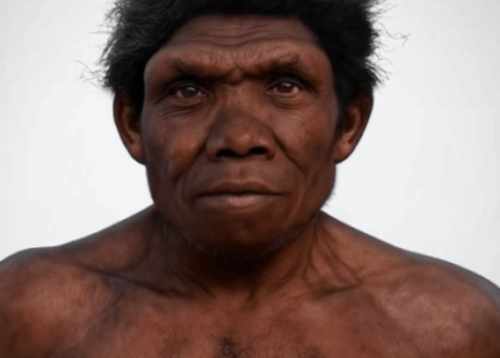
Ancient Chinese Skull Helps Uncover The Evolutionary Process, Origin of Homo sapiens
On reconstructing the cranium of the one-million-year-old Yunxian 2 fossil, reserchers found that the cranium contained both primitive and derived traits and concluded that it is representative of the H. longi clade, which is sister to H. sapiens and likely contained the Denisovans
Few fossils have been as enigmatic and potentially game changing in our understanding of human evolution, as the Yunxian crania from central China. The crania (Yunxian 1 and Yunxian 2) were discovered on a river terrace of the Hanjiang River, Hubei Province, and are among the most important examples of early Middle Pleistocene (Chibanian) humans in East Asia. However, for decades, because Yunxian 2 was so badly distorted, the phylogenetic significance of Yunxian 2 eluded researchers. Now, using state-of-the-art computed tomography (CT) scanning and digital reconstruction, researchers have reconstructed the original state of Yunxian 2, revealing primitive and derived features that suggest the crania are at or near a critical branch in the evolutionary history of our genus. The results of the study were published recently in the journal Science.
Reconstructing the one-million-year-old cranium
The study faced one of the central challenges of palaeoanthropology: extracting reliable data from fossils that are incomplete or distorted. The authors used high-resolution CT imaging to virtually separate each bone fragment from the surrounding matrix. Rather than using generic warping procedures, the authors repositioned individual fragments back to their original anatomical relationships, creating a digital model that maintained the true proportions of the cranium. The model included supplementary data from Yunxian 1, when possible, to fill some areas that were small enough to allow for repair, like the zygomatic arches.
The complete reconstruction of a Chibanian cranium from East Asia is one of the best preserved in research. The endocranial volume of Yunxian 2 is approximately equal to 1,143 cm³, which is similar to Dali, Hualongdong, and European specimens such as Petralona and Ceprano. The size range for Yunxian 2 occupies the middle range of Homo erectus to later Homo sapiens and Neanderthals. Although fine vascular detail could not be captured with the use of CT data given the low bone-matrix contrast, the gross shape endocranial shape was reconstructed.

Mosaic primitive and derived features
Yunxian 2 exhibits a unique combination of ancestral (plesiomorphic) and derived (apomorphic) traits. Its long, low, platycephalic (head with a broad or flat cranial vault) braincase and thick browridge are reminiscent of H. erectus, yet it does not exhibit the strongly angulated occipital torus of Asian H. erectus nor does it exhibit the occipital bun of Neanderthals. The parietals and temporals converge less strongly than in H. erectus, and only moderate projection of the midface is evident. The zygomatic region displays more anterior facing orientation than specimens such as Harbin (Homo longi), Dali, Jinniushan, Hualongdong and even some modern humans. Yunxian 2 is widest across the supramastoid region in posterior view and the mastoid processes slope inward. There is neither parietal expansion as is found in modern H. sapiens nor is there an extreme “en bombe” parietal configuration found in Neanderthals. The nasal bones are distinctly pronounced, and the upper face is broad, providing a distinctive but intermediate facial shape.
Reconstructing the evolution of Homo
The researchers performed a geometric morphometric analysis using 533 landmarks and semi landmarks comparing Yunxian 2 to 26 other fossil crania and 153 modern human specimens. The comparison included Yunxian 2 in a distinct cluster with Harbin, Dali, and Jinniushan, constructing a distinguishable morphospace Asian cluster. Yunxian 2 in the first principal component axis noted is within the range of H. erectus or H. ergaster close to Petralona or other presumed transitional forms. In the second axis the position marks Yunxian 2 higher than H. sapiens, H. erectus, and Neanderthal, but most closely aligned with Jinniushan. The position defines the specimen as intermediate, between the classic H. erectus and derived crania of the Middle Pleistocene.
Using parsimony and Bayesian tip-dating analyses, the phylogenetic analyses consistently associate Yunxian 2 to other Asian Middle Pleistocene fossils to form a monophyletic “longi clade” composed of Harbin (Homo longi), Dali, Jinniushan, Xujiayao, Hualongdong, the Xiahe mandible, and the Penghu mandible. By including Yunxian 2, this places the earliest known representative of the longi lineage group to be 1.1 million years ago at minimum.
The longi clade is identified as the sister group of the “sapiens clade,” which includes H. sapiens and its nearest ancestors. Both clades are distinct from the Neanderthal clade, which split somewhat earlier (about 1.38 million years ago). Bayesian tip-dating suggest that longi and sapiens diverged about 1.32 million years ago, with the origins of sapiens occurring around 1.02 million years ago. The narrow temporal interval between Yunxian 2 and the inferred longi-sapiens divergence suggests that the Yunxian 2 remains could represent transitional features near the last common ancestor of these clades.
Longi-clade hypothesis for the Denisovans
One of the more significant implications of the current research is in understanding the longi clade in relationship to the Denisovans. Genetic evidence from Denisova Cave demonstrates that Denisovans are distinct from both Neanderthals and modern Homo sapiens, but less is clear about their specific morphological identity due to a limited fossil record. The analysis provided here supports the longi-clade hypothesis for the Denisovans. The shared derived characters among the clade members, including dental features (especially the metacone reduction of M3, Carabelli’s cusp expression, and cusp size), join Denisovan material with the other members of the clade described here.
Role of Asia in shaping hominin diversity
The implications for reconceptualizing your understanding of Homo evolution were far-reaching. They highlighted the fact that the genus was already established in distinguished lineages, and phylogenetic relations were stable, by 1.3 million years ago. This deeper temporal structure is a significant challenge for older, simplistic, linear models of human evolutionary processes, and it establishes Asia as a key player in the causative processes shaping hominin diversity, as opposed to simply being the last geographical region of receipt of migration from Africa. As a complete cranium of comparable morphology to the earliest cranio-facial hominins from Africa, the Yunxian 2 cranium becomes not just an individual specimen, but a powerful data point anchoring the Asian evolutionary narrative.
The study additionally gauged the robustness of its phylogenetic conclusions through begins and ends testing of Yunxian 2-character scorings through bootstrapping resampling and significance testing of the cumulative data sets to establish agreement between the methods. Results established that because even potential error based in reconstruction did not contribute significantly to tree topology, we are confident in the position of Yunxian 2 in the longi clade, and that the conclusions of this study are not artifacts of reconstruction bias.
The reconstruction of Yunxian 2 has turned old scientific research into a robust line of evidence for the study of human evolution. By shining light, due to its unique mosaic morphology on the phylogenetic placement of Yunxian 2 within the longi clade, this study provides greater resolution and clarity to our understanding of the branching pattern of the genus Homo. We suggest that Asia has an ancient lineage that diverged early from the lineage leading to Homo sapiens. The combination of its ancestral and derived traits makes Yunxian fossil for representing the population closest to the last common ancestor of both longi and sapiens clades. This study reaffirms the value of digital technology, morphometric analyses, and phylogenetic modeling in order to recover evolutionary signals from fragmentary fossils.
Featured Image Credit: Ancestral Whispers, @Sulkalmakh