
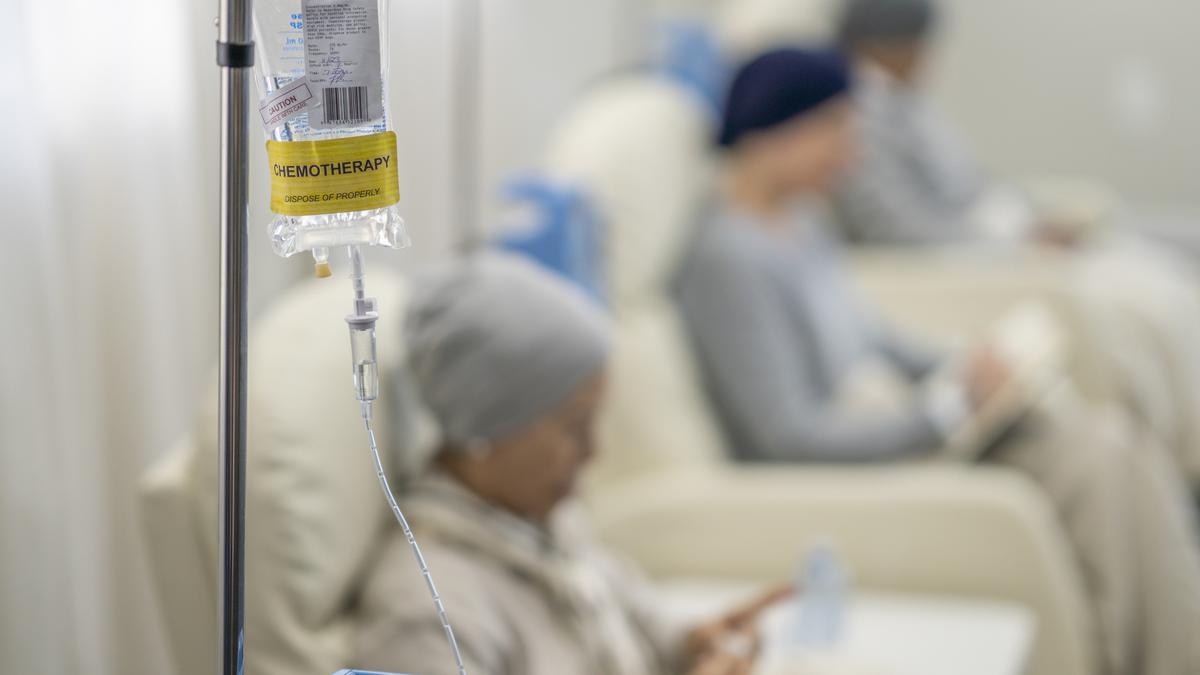
Counting Every Case: Why India Should Make Cancer a Notifiable Disease
Mandatory reporting would highlight which cancers are surging and where, enabling targeted campaigns — from anti-tobacco drives to HPV vaccination, and early screening in high-incidence areas. Several States have already made cancer notifiable, and their experiences offer valuable lessons
In August 2025, a Rajya Sabha Committee on Petitions chaired by Narain Dass Gupta delivered an important recommendation: declare cancer a notifiable disease across all States and Union Territories. For too long, India has failed to assess the true scale of its cancer burden — and what is not counted cannot be properly addressed. In the absence of complete data, cancer has remained a semi-invisible epidemic, undermining our health planning at every level. Making cancer notifiable nationwide would be the first and most crucial step toward changing this trajectory.
Today, India’s official cancer statistics likely understate the crisis. Recent registry data suggest about 15.6 lakh new cancer cases and roughly 8.74 lakh cancer deaths in 2024 alone. Put another way, cancer is killing close to 9,00,000 Indians every year. Alarmingly, over 70,000 of these deaths occur among young adults under 50, cutting lives short in their prime.
To put this in perspective, India saw an estimated 2.7 million COVID-19 deaths over two years, a tragedy that shook the nation and spurred an unprecedented emergency response. Yet cancer — which quietly claims nearly a million lives every single year — has not provoked anywhere near the same urgency. Many of these deaths are preventable if diagnosed earlier and treated effectively. The disparity in response comes down to perception and data: pandemics command attention because their toll is counted in real time, whereas cancer’s toll remains masked by incomplete reporting.
The hidden toll on a young nation
India’s fight against cancer is not just a health issue, but a threat to its demographic dividend and economic future. With more than 650 million youth, India’s prosperity depends on a healthy workforce. But cancers among younger adults are on the rise — often more aggressive, often diagnosed late, and often striking individuals in their most productive years. Each premature cancer death in a young adult means decades of lost productivity, devastated family finances, and a blow to the nation’s development. If India aspires to become a developed nation by 2047, it cannot ignore this silent epidemic.
Critics of notification argue that cancer, being non-communicable, “does not have community spread” and need not be tracked like infectious disease. This is flawed. Notification is not only about containing infections; it is about measuring and addressing any significant health threat. In November 2024, the Union government asked all the States to make snakebite cases and deaths, which is a non-communicable hazard, a “notifiable disease”; Tamil Nadu made snakebites a notifiable disease on November 6, 2024 even before India urged States to do so. So why not cancer, which shatters millions of lives annually?
With three out of every five individuals in India succumbing to death following a cancer diagnosis, in 2022, India had 9,16,827 cancer deaths, the second highest in the world. What is not counted simply does not exist in the eyes of policymakers. Better data can drive preventive action: the WHO estimates that 30% to 50% of cancers are preventable by reducing risk factors and implementing evidence-based strategies. Mandatory reporting would highlight which cancers are surging and where, enabling targeted campaigns — from anti-tobacco drives to HPV vaccination, and early screening in high-incidence areas.


Lessons from States that notify cancer
India does not have to start from scratch. Several States have already made cancer notifiable, and their experiences offer valuable lessons. Kerala’s registry, bolstered by mandatory reporting, has enabled more accurate mapping and planning of oncology infrastructure. In Mizoram, which bears one of the highest cancer incidence rates, notification data have shaped tobacco control campaigns. Punjab’s notification system arose in response to high rates in certain districts and has helped direct cancer clinics and subsidies where they are most needed.
At the same time, the patchwork of State laws highlights the need for a uniform national approach. A Lancet Regional Health review found wide variation across 11 States’ rules: whether patient identity is protected, whether “death certificate only” cases are included, what penalties exist for non-reporting, and how quickly cases must be reported. Some States used epidemic disease acts — which could create a false impression that cancer patients need isolation.
A national mandate can standardise best practices: reporting protocols, confidentiality safeguards, and integration with the national cancer registry. Crucially, dignity and privacy must be protected. Any reporting policy should include strict provisions that data be used only for research and public health, never discrimination. India already manages HIV and TB data confidentially, and cancer can be handled similarly. With a dedicated “Cancer Registry Act,” hospitals could be mandated to report while protecting patients.
Data is key improved research, innovation, patient outcomes
Despite four decades of the National Cancer Registry Programme (NCRP), India’s 43 registries cover only 10-18% of the population across just 23 States/Union Territories, as per an August 2025 study. At least 80-90% of Indians live in areas not comprehensively monitored. Without legal backing, reporting is patchy, especially in the private sector. Making cancer notifiable changes that equation overnight, obligating every hospital and practitioner to report each case and giving the National Cancer Registry Programme the scale it needs.
With notification, scientists would gain a rich dataset to study cancer patterns across India’s diverse population — yielding insights into genetic, lifestyle, or environmental factors. Some cancers currently thought “rare” may prove more common, meriting greater attention. Pharmaceutical companies would have stronger rationale to develop diagnostics and drugs suited to Indian patients.
Most importantly, notification can improve patient outcomes. Regional registries could flag patients who have not reached treatment centres, preventing them from slipping through the cracks. Awareness that every diagnosis counts may also encourage vigilance among healthcare providers in remote areas. And as studies show, early detection saves lives and reduces costs — an imperative in a country where out-of-pocket cancer costs bankrupt many families.
In a marked departure from its 2013 stand that India “does not propose to declare cancer as a notifiable disease”, the parliamentary committee’s recent recommendation has opened a door that must not be shut again. India has shown before that it can mobilise on a mission mode, from polio eradication to scaling up COVID-19 vaccination. Cancer deserves the same urgency. Yes, challenges exist in expanding registries and ensuring compliance, but with political will, funding, and digital reporting they can be overcome. The payoff — in lives saved and suffering averted — would be immense.


