
Miyawaki forests in urban India are effective for carbon sequestration
While the criticism about high tree density per sq. metre in Miyawaki forests is partly valid, the vertical growth due to high density is not inherently unnatural or detrimental, but rather mirrors early-stage dynamics of natural forest regeneration, and may even enhance carbon sequestration and canopy formation in the short term
A new study on three urban Miyawaki forests of South India has shown that these densely packed, native species-rich forests support good biomass accumulation, carbon sequestration and can likely be a powerful tool for climate change mitigation in Indian cities.
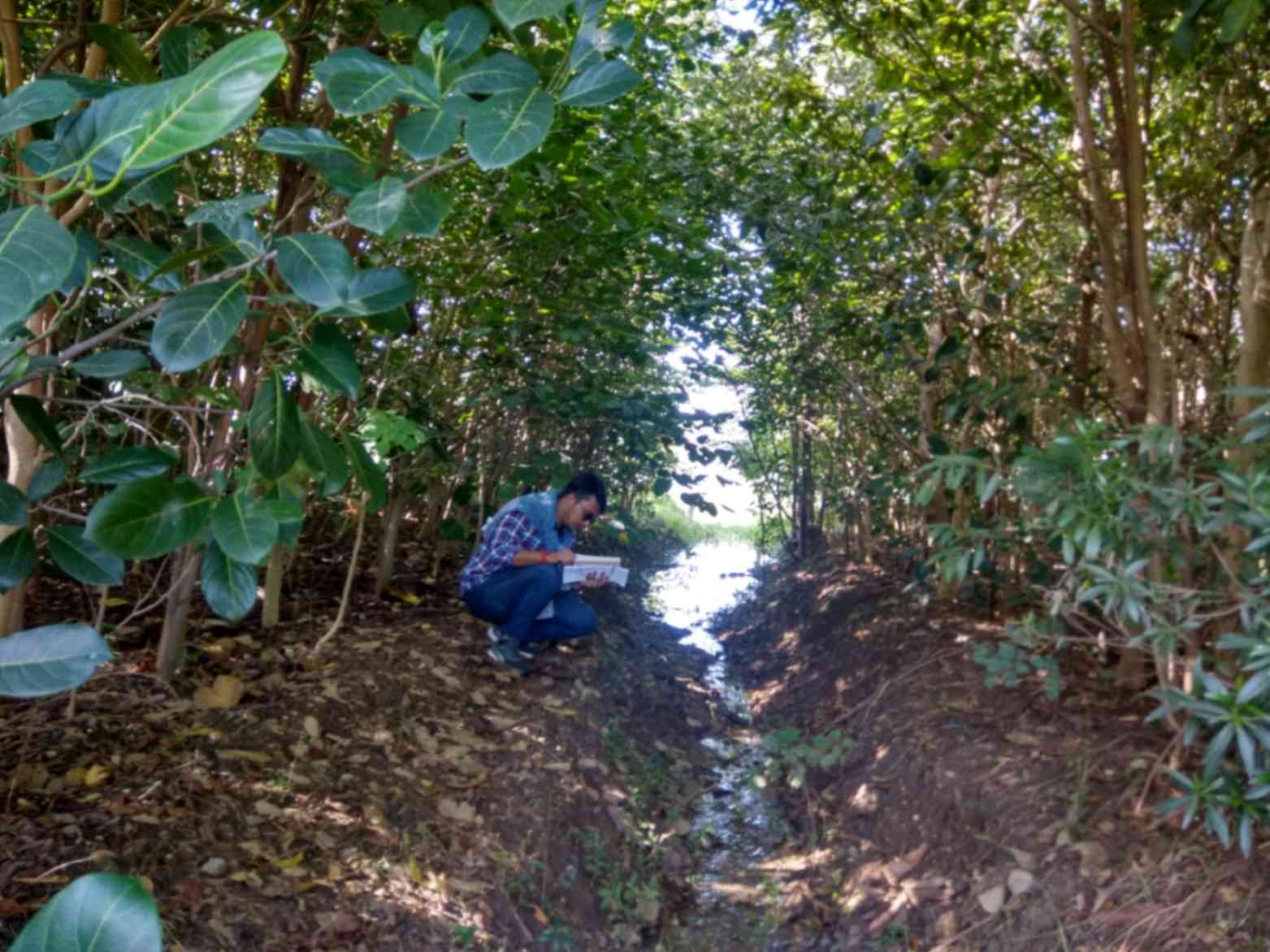
The team, led by researchers from Ashoka Trust for Research in Ecology and the Environment, Bengaluru and the Indian Institute of Technology, Palakkad, studied three sites in Bengaluru and Palakkad, cities known for high urbanisation and growing climate concerns. The fieldwork focused on forests aged two, four, and five years, and the findings were published recently in the journal Trees, Forests and People.
What are Miyawaki forests?
Developed in the 1990s by Japanese botanist Prof. Akira Miyawaki, this technique involves creating dense, multi-layered native forests that grow rapidly, achieving full canopy closure within two to three years.
Inspired by the sacred groves known as Chinju-no-mori, Dr. Miyawaki, who has spent decades studying the vegetation of Japan, planned to recreate the indigenous forests. Based on scientific observation, he developed what is now known as the Miyawaki Method.
“Several hundred years for reforestation are too long for us, however, because we live in a world where industry and urbanisation are developing very rapidly. We tried ecological reforestation by recovering topsoil and planting seedlings in pots with fully developed root systems directly from the terminal vegetation in succession, that is, the potential natural vegetation,” he wrote in a 1999 review titled “Creative Ecology: Restoration of Native Forests by Native Trees,” published in Plant Biotechnology.
He showed that multi-stratal or multiple layered quasi-natural forests can be built in 15-20 years in Japan and 40-50 years in Southeast Asia by ecological reforestation based on the system of natural forests.
Many cities in India have started embracing Miyawaki forests as a fast, scalable green solution. Cities like Bengaluru and Hyderabad are now home to dozens of such microforests, created mainly to reduce urban heat and improve air quality, and provide green spaces for residents. They are also widely adopted in corporate social responsibility (CSR) initiatives.
Studying the greens in rail yards, campuses
The first Miyawaki forest of the study was situated within the Indian Institute of Technology (IIT) Palakkad campus, covering an area of 1,600 sq. metre and was initially planted with 4,800 saplings representing 19 native species, at a density of three saplings per sq. metre. At the time of assessment, 1,200 individuals had survived. Herbivores and trampling by wild fauna such as chital, Asian elephants and wild boars, which regularly access the site from the adjoining forest department-controlled area, caused the reduction in species.
“The initiative was originally undertaken by the Engineering Works Department (EWD) of IIT Palakkad in 2021, primarily for aesthetic purposes rather than as a research project,” says Deepak Jaiswal, Assistant Professor at Environmental Sciences and Sustainable Engineering Centre (ESSENCE), IIT Palakkad and corresponding author of the paper.
The older Miyawaki forests examined in this study were located within the Indian Railways Diesel Loco Shed campus in Bengaluru. Each site contained 2,000 saplings planted at a density of three saplings per sq. metre. The four-year-old site consisted of 24 native species, while the five-year old contained 20 native species.
High tree density of Miyawaki forests not unnatural
When asked if the general criticism around tree density of three saplings per sq. metre which forces the trees to grow vertically and not in their natural way valid, Anirban Roy, Doctoral Researcher at the Ashoka Trust for Research in Ecology and the Environment, Bengaluru and first author of the paper explained: “The criticism is partially valid but needs to be understood in context. Miyawaki forests are designed to mimic the structure and succession patterns of native climax forests by planting a mix of native species at very high densities. This approach intentionally creates competition for light, which does promote rapid vertical growth — a phenomenon known as etiolation or shade avoidance response in plant physiology. In natural forests, especially in early successional or regenerating stages, similar competition-induced vertical growth is common. Therefore, this growth form is not necessarily “unnatural.”
He adds that while the vertical growth due to high density is real, it is not inherently unnatural or detrimental, rather mirrors early-stage dynamics of natural forest regeneration and may even enhance carbon sequestration and canopy formation in the short term. The key is to monitor such systems over time to evaluate their ecological resilience and structural stability.
Biomass, carbon sequestration rates
The team measured tree attributes, including diameter, height, to calculate the above-ground biomass, while belowground biomass was derived from above-ground biomass estimates using root-to-shoot ratios. Carbon storage and sequestration rates were estimated using an allometric approach, combined with the age of the forest.
The team found that the annual growth rate of forest biomass increases significantly with age, resulting in a total biomass accumulation of 165.7 megagrams of carbon per hectare (Mg C/ha) within five years of planting. This trend reflected the expected increase in biomass as forest stands mature and tree growth advances over time. The team projected that approximately 4.28 billion megagrams of carbon could be sequestered in biomass alone over five years following the establishment of Miyawaki plantations.
They also saw that the carbon sequestration rates showed a rapid increase with forest age, with the two-year-old forest sequestering 5.284 Mg C per hectare per year, the four-year-old forest sequestering 20.042 Mg C per hectare per year, and the five-year-old forest sequestering 33.084 Mg C per hectare per year.
The team also identified approximately 2,58,000 per sq.km of marginal land in India with similar climatic conditions, pointing to a potential for scaling up this afforestation method nationwide.
So, should we start making more Miyawaki forests? “With science and planning,” says Roy. “It is important to account for historical land-use patterns, as well as the local ecological, biophysical, and social contexts, before establishing Miyawaki plantations.”
While the study did find that Miyawaki plantations are performing well in terms of carbon sequestration, it is important to note that it was limited to just three sites and would be premature to generalise these findings to other locations without further, site-specific research.
Grassland is not equal to wasteland
Roy adds that one of the most critical steps in establishing Miyawaki plantations is to first scientifically assess the land. “All too often, open grassy plots are misclassified as ‘wasteland’ and swiftly transformed into forest sites. While Miyawaki forests may contribute to India’s carbon budgeting efforts, this should not come at the cost of replacing ecologically valuable natural ecosystems like grasslands (which may superficially resemble wastelands) with dense plantations,” he warns.
He adds that proper site assessment should include soil testing, land-use history, and conversations with local communities to understand what the land has supported in the past. “Another common mistake in urban afforestation is the tendency to introduce non-native ornamentals just because they look appealing. Choice of species should be driven by the local ecology. Native species have evolved over millennia in a given region, forming intricate relationships with local soils, climate, pollinators, seed dispersers, and other flora and fauna. Planting them helps rebuild these co-adapted ecological networks, many of which are critical for biodiversity support,” notes Roy.
He explains the several reasons for this insistence:
Ecological compatibility: Native trees are better adapted to local conditions, which often makes them more resilient in the long term with minimal maintenance after establishment. They tend to support a broader range of native insects, birds, and other wildlife — contributing to richer food webs and greater ecological functioning.
Avoidance of invasiveness: Non-native species, even if seemingly harmless, can sometimes become invasive; outcompeting native flora, altering soil chemistry, water use, or fire regimes, and disrupting local ecosystems. By restricting planting to native species, the risk of such unintended consequences is significantly reduced.
Cultural and historical value: Many native trees hold significance in local knowledge systems, traditions, and livelihoods. Their inclusion can thus reinforce cultural continuity and foster local stewardship, especially important in community-led or urban greening efforts.
Restoring biotic interactions: From mycorrhizal fungi to insect herbivores to seed-dispersing animals, native trees are integral to maintaining these often invisible yet essential relationships. Non-native trees may fail to support such interactions, even if they grow well.
Unsuitability of banyan trees
Banyan tree (Ficus benghalensis) is almost never planted in Miyawaki forests, he stressed. Despite being ecologically significant and native to much of India, the banyan’s slow juvenile phase, massive horizontal spread, and need for space to develop aerial roots and buttresses make it incompatible with the Miyawaki model. Such species are functionally excluded — not because they are not native, but because they do not align with the model’s spatial and temporal design constraints.
He adds that the strength of Miyawaki forests lies in increasing biomass and native cover rapidly — but it does not replicate the full ecological spectrum of natural forests, especially when it comes to large, long-lived species like banyan, sal (Shorea robusta), or mahua (Madhuca longifolia).
The two-year canopy goal of Miyawaki forests prioritises species that can thrive in competitive, resource-limited conditions. This makes the approach effective for specific contexts, but it also means that some iconic native species are necessarily left out. Acknowledging this trade-off is important when designing such forests or interpreting their ecological value.
Miyawaki forest in space-constrained environments
There is no universally defined minimum area or number of trees required to establish a Miyawaki forest, explains Roy, adding that the strength of the Miyawaki method lies in its adaptability to space-constrained environments
“Miyawaki forests have been successfully implemented in areas as small as traffic islands, institutional courtyards, or narrow roadside strips. What defines a Miyawaki forest is not its size, but its methodology; while larger plots (>100 m²) allow for greater species diversity, better stratification, and more ecological interactions, even small-scale Miyawaki patches can contribute meaningfully to biodiversity enhancement, carbon sequestration, microclimate regulation, and urban greening— especially when done in networks or mosaics. What qualifies a site as a Miyawaki forest is adherence to its core ecological principles, not its scale,” he notes.
Miyawaki and natural nutrient cycle
One of the core ecological principles of the Miyawaki method is to promote natural nutrient cycling and soil health through organic matter decomposition, rather than relying on external inputs or interventions. He explains how leaf litter in Miyawaki forests helps. “In natural forests, leaf litter serves multiple functions: returning organic matter and nutrients to the soil, enhancing microbial and fungal activity, retaining moisture and moderating soil temperature, suppressing weed growth, and providing habitat for decomposers and other ground fauna. The Miyawaki method mimics these processes by initially applying mulch (often straw, husk, or other biomass), and over time, allowing natural litter from the densely planted trees to accumulate. This creates a self-sustaining forest floor, reinforcing ecological resilience and reducing the need for maintenance.”
“However, this process also has its limitations. Due to the dense planting pattern and rapid biomass accumulation, leaf litter can become excessive in some cases, forming thick layers that impede natural recruitment of herbs and ground flora. This is especially true for light-demanding or small-seeded herbaceous species that require specific microsite conditions for germination and establishment. In effect, the thick litter layer, while beneficial for soil health, can limit understory diversity if not ecologically managed or balanced with species-specific considerations. Additionally, in some urban or managed plots, well-intentioned but misguided maintenance practices such as regularly sweeping or removing leaf litter for aesthetic reasons can undermine the ecological functioning of the system, disrupting nutrient cycling and soil biota.”
He adds that allowing leaf litter to decay naturally aligns with the ecological goals of the Miyawaki method. Yet, in dense plantations, excessive litter can sometimes hinder herbaceous regeneration, pointing to a trade-off that requires more nuanced management, especially when aiming to sustain multi-strata plant diversity over time.
Biodiversity ‘stepping stones’
Roy explains that Miyawaki forests, particularly in urban or fragmented landscapes, can support a range of insects and small animals, but the extent and diversity of such ecosystem formation depends heavily on scale, age, species composition, and landscape context.
“In their early years, Miyawaki patches often attract a variety of insect species — pollinators like bees and butterflies, decomposers like beetles and ants, and occasionally predatory insects such as spiders and wasps. As vegetation matures and structural complexity increases, birds, reptiles, amphibians, and small mammals may also begin to visit or inhabit these spaces, especially if there’s nearby green cover or water sources. These signs of colonisation suggest that Miyawaki forests can act as microhabitats or stepping stones within urban matrices.
However, their small size and ecological isolation often limit the diversity and stability of these emergent ecosystems. Unlike natural forests, Miyawaki plots are frequently disconnected from other habitat patches, making it harder for more specialised or range-dependent species to establish. Functional groups like ground-dwelling reptiles, amphibians, or nocturnal mammals may be absent unless corridors or buffer zones connect these patches to larger green areas. Moreover, ecological interactions such as predation, seed dispersal, or pollination networks may be relatively simplified or incomplete in highly isolated patches. While insect life is usually the first to appear, trophic complexity tends to remain limited unless there’s active landscape-level planning to enhance connectivity.
Taken together, Miyawaki forests do attract and support insects and small animals, especially generalist and urban-adapted species. But their ecological functioning as self-sustaining ecosystems is often determined by isolation, size, and surrounding land-use. Over time, they may serve as biodiversity ‘stepping stones,’ but expecting them to replicate the full ecosystem dynamics of natural forests, especially in isolation, is unrealistic without broader habitat connectivity.
Miyawaki forests in Japan vs in India
According to the original principles laid out by Akira Miyawaki, the method emphasises planting native tree species. But Roy points out that Miyawaki’s work was developed for temperate ecosystems like Japan, where forest dynamics differ from India’s tropical zones. While Miyawaki’s approach focuses heavily on trees, Roy recommends including shrubs and herbs and also looking at age diversity for Indian Miyawaki forests.
“The Miyawaki method is designed to create multi-strata vegetation, ideally including species from all forest layers — canopy, sub-canopy, understory, and groundcover. In theory, this allows for the inclusion of shrubs and herbs. However, in practice, their presence is often limited due to both ecological constraints and implementation choices.
“In many real-world Miyawaki projects, practical considerations such as limited plot size, nursery stock availability, and budget lead to a focus on tree species. Shrubs and herbs are often left out or underrepresented, especially in smaller urban plots. That said, there is growing interest in introducing shade-tolerant shrubs and ground flora in Miyawaki plots, particularly in larger or more ecologically ambitious projects. Species like Nyctanthes arbor-tristis (Parijata) have been used experimentally with some success. However, their inclusion requires careful selection, ecological understanding, and post-planting maintenance — factors that are often overlooked in standard Miyawaki implementations.
He adds that while the Miyawaki method conceptually allows for shrubs and herbs, the emphasis on rapid canopy closure and dense tree planting often constrains their survival and development. Achieving a truly layered forest structure would require more deliberate integration of understory species and attention to the long-term light dynamics within the forest patch.
The team plans to revisit the three study plots periodically to build long-term datasets and envision that Miyawaki forests can play a measurable role in India’s carbon budgeting or offset programmes.


