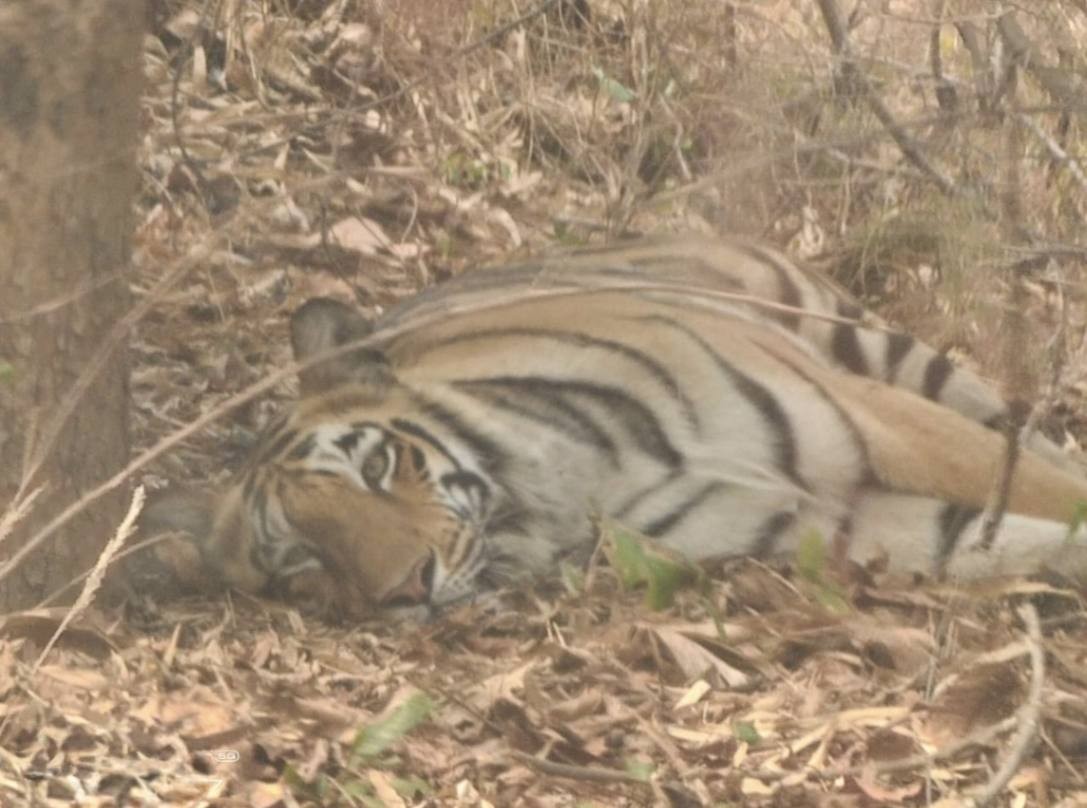
External factors influence changes in tiger microbiota in five tiger reserves in India
Fresh tiger faecal samples from five tiger reserves across India had different microbiota despite no major differences in diet, hinting at the role of external factors in shaping the bacterial composition
Fresh tiger faecal samples from five tiger reserves across India — Corbett (Uttarakhand), Tadoba-Andhari (Maharashtra), Kanha and Bandhavgarh (Madhya Pradesh), and Periyar (Kerala) — had different microbiota despite no major differences in diet, hinting at the role of external factors in shaping the bacterial composition. The samples were collected during summer, winter, and monsoon seasons from the core and buffer zones of the reserves.
Among the 96 faecal samples collected, 47 were confirmed as tiger samples and 43 were subjected to analysis. There were around 10 samples from each reserve. The sex was determined for 36 samples — 19 samples were found to belong to females and 17 were of male tigers; sex for the remaining samples could not be determined due to insufficient host DNA.
Evidence of anthropogenic pressure
“Across the five tiger reserves, we found many bacteria that are common but also found unique set of microbiomes in some reserves,” says Dr. Govindhaswamy Umapathy from the Centre for Cellular and Molecular Biology (CSIR-CCMB), Hyderabad who led the team and is the corresponding author of a paper published recently in the journal Global Ecology and Conservation. “The number of microbiota is similar in all samples collected from the core of the five reserves, but the composition is different in the samples collected from the parks where various levels of human activity were observed.” Human activity includes tourism, cattle grazing, and cattle and tiger sharing the same water source.
To assess the impact of external factors on bacterial composition, the researchers took into account four different variables — the tiger reserves, the zone (core and buffer), seasons and sex of tigers. Parks, buffer and core zones with different levels of anthropogenic disturbances, season and sex accounted for 9.31% and 14.92% of the variability in the occurrence and abundance of bacterial genera, respectively.
“We found 28 core bacterial genera were common to all five tiger reserves, and 29 core genera were common across seasons. The Tadoba-Andhari reserve had zero unique bacterial genera, while the Periyar reserve in Kerala had the most unique bacterial genera at 11. Both Kanha and Bandhavgarh reserves had four unique bacterial genera, and Corbett had just one unique genus,” says Gudimella Anusha, a PhD student at CCMB and the first author of the paper.
Similarity, differences between tiger reserves
The study found that the gut bacterial composition varied significantly between monsoon and winter, highlighting the influence of seasons on microbial communities. The study found that the gut microbiome was similar in two Central Indian tiger reserves, Kanha and Tadoba, whereas both were distinct from another Central Indian reserve, Bandhavgarh. The similarity in bacterial composition between Kanha and Tadoba may be attributed to their geographic proximity, comparable climates, and habitat types. But that does not still explain why the bacterial composition is different in the case of Bandhavgarh. In fact, both Kanha and Bandhavgarh are located in the same State of Madhya Pradesh. Interestingly, despite different regions, climate and habitats, the Corbett reserve in Uttarakhand, Kanha and Tadoba-Andhari in Madhya Pradesh and Maharashtra, respectively and Periyar in Kerala shared similar bacterial community structures.
Core bacteria — bacterial genera consistently present within a host population — play a pivotal role in shaping gut microbial composition. “The abundance of core bacteria varies across reserves, zones, and dry and wet seasons,” says Anusha. Besides commonly shared core bacteria among these reserves, the study also found unique bacterial communities that reflect the distinct extrinsic factors of each habitat. Each tiger reserve was found to harbour unique bacterial genera, with some tiger reserves exhibiting more unique taxa than others. “These differences in the unique bacterial genera are likely influenced by human activities such as human settlements and cattle presence, which are commonly found in the buffer zones. These can affect the natural gut microbial balance in tigers,” says Dr. Umapathy.
How microbiota changes
Referring to earlier studies by other groups, Dr. Umapathy says that changes in diet when tigers are moved from wild to captive brings about 50% changes in microbial composition within four months. In humans, different microbial compositions are found in people consuming vegetarian and non-vegetarian food. Also, the microbial composition can change in three-five months when different food is consumed. “These studies have shown that different diets can result in different microbiota across mammalian species,” says Dr. Umapathy.
“Investigating shifts in gut bacterial composition in response to human-induced disturbances can provide deeper insights into the extent and persistence of these impacts, thereby informing strategies to mitigate human pressures and enhance tiger conservation outcomes,” says Dr. Umapathy. “The gut microbiome serves as a key indicator of tiger health and habitat quality. Managing anthropogenic pressures, such as unregulated tourism and livestock grazing, through microbiome-informed strategies could enhance tiger fitness and disease resilience.”