Asia’s First Thorny Bamboo Fossil Unearthed in Manipur’s Imphal Valley
Unlike trees, bamboos, which have hollow culms and fibrous tissues, seldom get fossilised. That makes the Imphal Valley bamboo fossil remarkable — not only does it retain structural features such as nodes, internodes, and nodal buds, but it also preserves scars of thorns, details that almost never survive fossilisation
In the silt-rich deposits of the Chirang River in Manipur’s Imphal Valley, we uncovered a fossilised bamboo stem so well-preserved that even its thorn scars remain visible. The fossil specimen identified as Chimonobambusa manipurensis (its name reflecting both its status as a thorny bamboo species and its place of discovery, Manipur) — is about 37,000 years old, dating back to the Ice Age (Late Pleistocene). The thorny fossil bamboo was dated using thermoluminescence and radiometric methods. This is the earliest thorny bamboo fossil ever reported from Asia, offering rare insights into how plants evolved survival strategies and adapted to the climatic and ecological challenges of the time. The results of the study were published recently in the journal Review of Palaeobotany and Palynology.
Why bamboo fossils are rare
Unlike trees, which leave behind sturdy trunks, roots, and leaves, bamboo seldom gets fossilised. Its hollow culms and fibrous tissues decay quickly, rarely surviving long enough to be preserved in sediment. That makes the Imphal Valley fossil remarkable — not only does it retain structural features such as nodes, internodes, and nodal buds, but it also preserves scars of thorns, details that almost never survive fossilisation. For palaeobotanists, such finds are extraordinary because they reveal not just the presence of bamboo in the past but the very traits that defined its evolutionary strategies.
Scars that tell a story
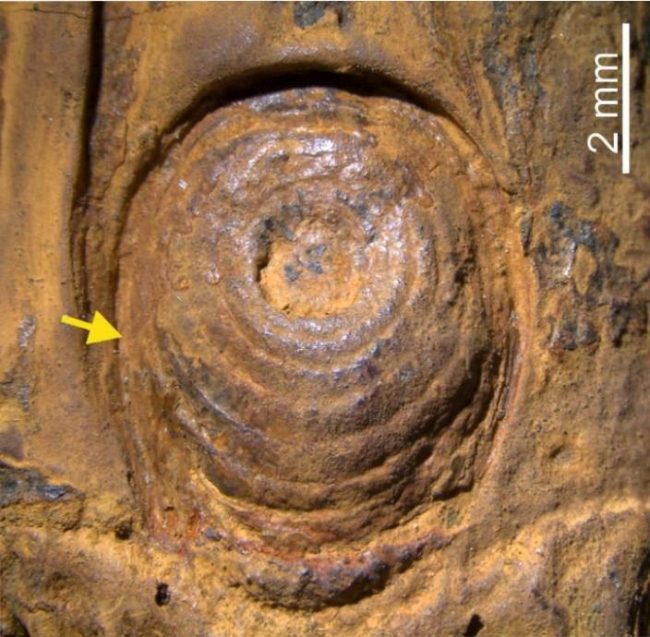
Closer examination revealed that this was more than just a culm impression. The distinct scars of thorns testify to a plant locked in a constant struggle with grazers. Around 37,000 years ago, the Imphal Valley supported elephants, rhinos, deer, and wild cattle, for whom young bamboo shoots would have been an attractive food source. For bamboo, thorniness was its armor — a natural defense against being overgrazed.
This adaptation is still evident today. The spiny or thorny bamboo (Bambusa bambos), common in India, forms dense, impenetrable thickets. Its sharp spines discourage grazing animals. Likewise, arrow bamboo (Chimonobambusa callosa) in China is known for its strong defensive thorns. The Manipur fossil demonstrates that this adaptation was already established in Asia tens of thousands of years ago, providing the earliest direct evidence that plants were actively shaping defenses against herbivores long before modern ecosystems emerged.

India: Cradle of bamboo evolution
The thorny fossil also connects to the broader evolutionary story of bamboo in Asia. India, particularly the northeast region, holds the earliest bamboo records on the continent. Fossils from Assam, dating to the Oligocene (about 25 million years ago), show that bamboo was already thriving in the region’s warm and humid forests. These ancient remains suggest that northeast India served as the cradle of bamboo evolution in Asia, from which the plant diversified and spread into other landscapes.
Later fossil discoveries from the Miocene (about 23 million years ago) in Nepal and China’s Yunnan Province document bamboo’s expansion across the Himalayas and southeast Asia. Europe, too, once had bamboo during the Oligocene and Miocene, but colder and drier Ice Age climates eliminated it from the region. Asia, however, remained a stronghold. Geography played a crucial role: Northeast India — a biodiversity hotspot — which includes present-day Manipur, retained warmth and humidity even during harsh global downturns. The 37,000-year-old Chimonobambusa manipurensis fossil is direct evidence of this resilience. It confirms that bamboo endured in northeast India during the climatic swings of the Pleistocene, when much of the world’s vegetation was under severe stress. The northeast region acted as a refugium — a sanctuary where species could persist while disappearing elsewhere.
A living legacy of survival
This continuity explains why northeast India remains a biodiversity hotspot today. Its forests are not just rich in species; they are living museums harbouring lineages that date back millions of years. The thorny bamboo fossil reinforces the idea that the region has been both a cradle and a refuge of biodiversity, helping plants survive repeated episodes of global change.
For palaeoscientists, the thorn scars are particularly significant. They are direct evidence of plant-animal interactions, rarely preserved in the fossil record. Instead of inferring adaptation from modern analogues or indirect clues, here the adaptation itself — the scars of thorns — is preserved in stone. These marks are silent witness to ancient ecological negotiations, showing that even tens of thousands of years ago, bamboo was evolving strategies to cope with pressure from herbivores.

Lessons for a warming world
The relevance of this fossil extends far beyond the past. As climate change reshapes ecosystems today, forcing species to adapt or risk extinction, the survival story of bamboo offers timely lessons. During the Ice Age, bamboo endured because regions like northeast India provided ecological stability. Protecting such refugia today — areas that offer continuity despite global disruptions — is critical for conserving biodiversity.
The thorny bamboo fossil also reminds us that adaptation alone is not enough. Plants can evolve defenses, but they need stable environments for those strategies to succeed. Without the warmth and humidity of northeast India, thorny bamboo may not have survived the climatic upheavals of the Pleistocene.
Resilience etched in stone
The discovery of Asia’s first thorny bamboo fossil is much more than a scientific curiosity. It is a story of resilience etched in stone — a reminder that even delicate plants like bamboo have long histories of survival shaped by both climate and ecology. From the Oligocene bamboos of Assam to the thorny culms of Pleistocene Manipur, the narrative is one of persistence. And today, in every spiny thicket of Bambusa bamboos or arrow bamboo, that history continues to live on.
In its thorn scars, Chimonobambusa manipurensis carries a timeless message: survival is never accidental. It is forged through adaptation, nurtured by environment, and preserved across generations. For a planet once again in the throes of climate change, that is a lesson worth remembering.
The featured image is an enlarged microscopic view of the 37,000-year-old fossil bamboo showing preserved bud (yellow arrow).