Only inStem, NCBS have Research Integrity Offices to check academic misconduct despite UGC recommendation, growing retractions
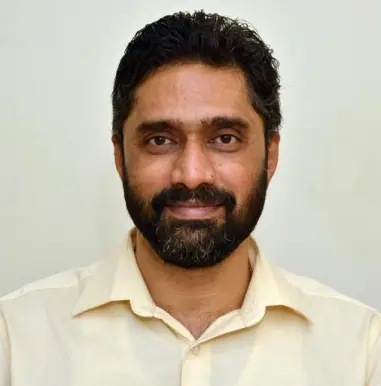
Expenses to run the research integrity office is well worth it, feels Dr. Shashidhara of NCBS as the price the institution will pay in case of research misconduct will be huge in terms of future funding, recruitment and overall reputation
In February 2022, two years after the University Grants Commission (UGC) recommended that all universities and institutions set up Research Integrity Offices (RIO), the Bengaluru-based Institute for Stem Cell Science and Regenerative Medicine (inStem) and the National Centre for Biological Sciences (NCBS) became the first two institutions in India to set up such an office. Except for these two institutions, research integrity offices are non-existent in other Indian research institutions and universities.
Incidentally, there are very few papers published by researchers at NCBS and inStem that have been retracted, if at all. Yet, these two institutions have been in the forefront to set up research integrity offices. Importantly, inStem recruited a permanent Research Ethics and Integrity Officer in February 2022, and NCBS has done so recently.
Pressing need for research integrity offices
The absence of research integrity offices in Indian institutions is acutely felt as India now ranks third behind China and the U.S. in the number of retracted papers. Taking into account the number of retractions per 1,000 published papers, India fares even worse. India ranks second behind China on this metric — India has two retractions per 1,000 papers, while China has three per 1,000 and the U.S. has just one retraction per 1,000 papers. The majority retractions in India and China are due to “misconduct or research-integrity concerns,” notes an August 2025 Nature News article.
If publishing papers in predatory journals by itself is a form of misconduct, especially when done knowingly, even papers with serious misconduct that are published in predatory journals never get retracted, thus masking the real extent of research integrity problems in India.
In contrast, way back in March 1989, the U.S. established the Office of Scientific Integrity and the Office of Scientific Integrity Review, which later became the Office of Research Integrity (ORI) in May 1992. The Office of Research Integrity came into being when research misconduct became a public issue in 1981 after research misconduct cases at four research centres in the U.S. the previous year became public.
While the U.S. legislated that Health and Human Services issue a regulation to all institutions that receive federal funding to establish a process to “review reports of scientific fraud” and report any “investigation of alleged scientific fraud which appears substantial”, UGC opted to only issue a “recommendation” to institutions to address the growing scientific misconduct in the country by setting up research integrity offices.
First of its kind
“Research integrity office started together for NCBS and inStem. Now, we have Research Integrity Offices, the first of its kind in India, at inStem and another one in NCBS,” says Dr. L.S. Shashidhara, Professor and Director of NCBS. “We are actually running the research integrity office with the help of a permanent staff rather than employing someone on an ad hoc basis. We are giving so much importance to the research integrity office.”
Dr. Sabuj Bhattacharyya who was hired as a full-time and permanent Research Ethics and Integrity Officer in February 2022 by inStem helped set up common processes for both inStem and NCBS. NCBS hired another person on contract as a counterpart to Dr. Bhattacharyya; Tanvi Singh was recruited as a permanent Research Ethics and Integrity Officer for NCBS recently.
Commenting on why NCBS and inStem despite their almost impeccable track record were the first to set up research integrity offices, Dr. Shashidhara says that every researcher at these two institutions is very careful because they know that no one can get away with scientific misconduct, and any unethical conduct will eventually get exposed. “We also tell our research scholars and faculty that we have sufficient checks and balances and oversight, and advise them not to indulge in scientific misconduct. We also tell them that punishment can be very severe if something goes wrong,” he says.
Functions of research integrity office
The research integrity office at these two institutions creates awareness and regularly conduct training programmes for students and faculty. The office has also formulated policies and protocols for using tools to check for academic integrity prior to paper publication and to archive all forms of publication-related data to improve transparency and reproducibility of research conducted at the institute, and to investigate when complaints of misconduct arise.
“The RIO not only upholds research ethics and integrity, but also focuses on training, maintaining different kinds of data which are publication-related to ensure that people are very mindful when they’re publishing something. And if something goes wrong, the RIO will carry out investigation,” says Dr. Bhattacharyya, who has a PhD from the Wildlife Institute of India, Dehradun, and the University of Colorado, Boulder, and a Postdoc at the Indian Institute of Science, Bangalore, and the University of Sheffield, UK.
Lack of understanding
“None of the State and Central universities, including IITs, have dedicated research ethics and integrity officers,” says Dr. Bhattacharyya. “However, when I did a national survey and reached out to Chairs and Heads of departments asking them if they have research integrity officers, many indicated that they do have one. But when we cross-checked their websites, we could not find any information. I believe, in many cases, the research integrity office is considered synonymous to biosafety, stem cell ethics committee or animal ethics committee etc, which is not correct. So, even the understanding of the research integrity office as a unique office is still in the nascent stage in India,” Dr. Bhattacharyya says.
“Before manuscripts are sent to journals, scientists at inStem are required to submit their manuscript containing all kinds of data and images. Besides checking the manuscript for plagiarism, the images are checked using a web-based tool called Proofig to check if any pictures used in the manuscript are cloned or AI generated,” he says. While duplication of images within the same paper is checked, reuse of images — diagrams, flowcharts, box plots, and photographs — across articles is not checked, as the software (Imagetwin) is very expensive.
When allegations of scientific misconduct arise, a fact-finding committee investigates and in case there is prima facie evidence of misconduct then it is sent to the centralised TIFR academic ethics committee. The academic ethics committee, which has people from different disciplines with scholarly understanding of ethics and integrity, will investigate and recommend punitive action, says Dr. Shashidhara.
Questions about making committee findings public
If a person is found guilty of any misconduct, will the findings of the committee and the punitive actions be made public or will they remain confidential? “We keep it confidential as much as possible because besides the punishment we impose, they need not have to go through another round of punishment like public harassment or something. Because very often, depending on the nature of the misconduct in academics, there is always scope for learning from one’s mistake,” says Dr. Shashidhara. “They will be repentant to what has happened and hopefully change their way of functioning and will be more careful. So, we need to give them a second chance.”
Referring to 34 retractions of Prashant K Sharma of IIT Dhanbad, Dr. Shashidhara is categorical that such kinds of misconduct must be made public. In the U.S., the Office of Research Integrity on its website often lists out case summaries of scientists who have engaged in research misconduct. In the case of Dr Liping Zhang, former Assistant Professor in the Department of Medicine, Section of Nephrology, BCM, the Office of Research Integrity found the Dr. Zhang had “intentionally and knowingly falsified and/or fabricated” images, used unrelated images, or reused and relabelled the same images to “represent falsely different experimental results” in three unpublished manuscripts submitted for publication and four grant applications.
Lack of funding
Owing to the nascent stage of research integrity office in India, funding is a major challenge. “One main challenge I face is the very limited amount of funds available for research ethics and integrity or even regulatory compliance,” says Dr. Bhattacharyya. “But hopefully, the government will come up with funding in some manner.”
NCBS uses its own fund to run the research integrity office. Dr. Shashidhara says that the cost of maintaining the database is increasing as the amount of raw data to be stored is increasing and also because NCBS has to maintain a mirror database so that the data are not lost. Expenses to run the research integrity office is well worth it, feels Dr. Shashidhara as the price the institution will face in case of research misconduct will be huge in terms of future funding, recruitment and overall reputation to the institution. “So obviously it’s worth spending that money,” he says.
Though NCBS has funds to meet these expenses, he admits that some institutions may not have sufficient funds to run the research integrity office without external funding. “If government provides funding, then it will encourage other institutions to set up a research integrity office. There will be obligation and responsibility if there is also funding associated with it. If it is made mandatory to have a research integrity office with little bit of funding, hopefully that will become institutionalised,” says Dr. Shashidhara.