Saving the seas: Conserving marine life to give a man a fish
Behind every dish containing a fish, prawn, or other seafood, lies a delicate ecological balance: healthy populations of these marine resources replenish themselves only when spawning habitats are protected and harvest pressures kept in check
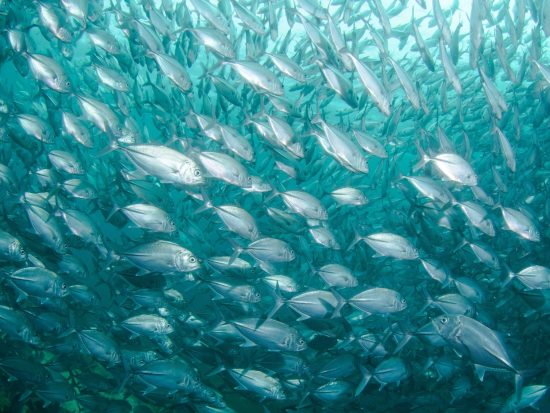
My first scuba diving experience at Elephant Beach in the Andaman Islands was a moment I will never forget. Suspended underwater, I found myself drifting through a dazzling world of vibrant coral, colours so vivid they seemed otherworldly. Schools of radiant fish glided gracefully past, indifferent to my awe. In that instant, enveloped by the gentle pulse of marine life, I realised I was experiencing something profoundly special — a glimpse of the hidden wonders quietly sustaining life on Earth, yet fragile enough to vanish if left unprotected.
Every year since 2009, the world has celebrated World Oceans Day on June 8th to celebrate one of our planet’s greatest resources. The United Nations’ theme for 2025 — ‘Wonder: Sustaining What Sustains Us’ — is to remind us that beyond its majestic waves and breathtaking biodiversity, the ocean underpins our health, livelihoods, and cultures.
Nowhere is this truer than in India, where more than five million fishers and their families rely on marine ecosystems for food security and economic opportunity. Beyond sustenance, marine fisheries are the backbone of employment for millions. Across India’s 11,000 km-long coastline, hundreds of fishing boats leave the shore at dawn, guided by generations of traditional knowledge about currents and seasons. These fishers, and the many boat builders, net makers, seafood processors, and market traders they support, fuel local economies. According to the Department of Fisheries, the nation’s annual marine catch for 2023-2024 was 3.55 million tonnes, generating over $7 billion (about ₹60,500 crore) in export revenue. Therefore, when marine fisheries falter, coastal communities risk economic collapse, driving distress migration and deepening poverty.
Maintaining ecological balance
To India’s fishermen, marine harvests are more than commerce; they are cultural lifelines. For Indians living in coastal areas, seafood is woven into daily meals and festive menus, anchoring regional cuisines and collective memories. Yet, behind every dish containing a fish, prawn, or other seafood, lies a delicate ecological balance: healthy populations of these marine resources replenish themselves only when spawning habitats are protected and harvest pressures kept in check. In 2025, as we wonder at the oceans’ marvels this year, we must also heed an urgent call — to protect and restore the ocean fisheries on which millions depend.
Until the late 19th century, a common view was that most fish stocks were inexhaustible. This false confidence fuelled ever-expanding commercial fishing, with advances in gear, vessels, and processing enabling larger catches. It was not until the 1960s that the damage being inflicted by humans on marine wildlife became painfully clear. This era coincided with the rise of nature documentaries showcasing the marvels of marine life. Sir David Attenborough, perhaps the most famous documentary storyteller, captivated global audiences with the ocean’s awe-inspiring creatures, blending scientific insight with narrative magic.
New Zealand’s pioneering policy
Currently, overfishing, habitat destruction, and climate change are eroding fish stocks and destabilizing ecosystems. Globally, more than one-third of fish populations are overfished, imperilling the ocean’s biodiversity. Yet there are glimmers of hope: for instance, New Zealand’s pioneering quota management system — introduced in the 1980s — is often credited with reviving its fisheries by scientifically limiting catches. Examples such as this prove that with science-based stewardship, depleted fisheries can rebound.
Globally, restoring fish populations has and continues to be a long and complex process. New Zealand’s attempts at using science-backed policies and a pioneering framework to revive marine ecosystems is an inspiring success story. Faced with collapsing fish stocks, New Zealand introduced the quota management system (QMS) in 1986, under which, commercial fishers are allocated a tightly-regulated share of the total allowable commercial catch (TAC) for various species; these allocations are transferable and tradeable. The quota management system relies on continuous and scientifically conducted stock monitoring, which allows for aligning economic incentives with conservation goals. Today, it stands as one of the most successful fisheries management systems in the world by ensuring long-term sustainability for both fishers and ecosystems.

To replenish fish stocks
Many fishing nations of the world enforce seasonal ban as a conservation measure. The imposition of such a ban date back to centuries. The closure period ranges from 45 days (Texas/ USA) to 9 months (New Zealand). Protecting the spawners during peak spawning season, reducing the fishing effort and giving respite to the benthic fauna from intense trawling are major reasons for seasonal closure of fishing. In India, it is believed that spawning of commercially important fish stocks takes place during June-September (Southwest monsoon) along the west coast, and during April-May along the east coast. The management of fisheries in India is governed by rules and regulations formulated under the Marine Fisheries Regulation Acts of respective maritime States. Although seasonal fishing ban is just one of the many tools available for fisheries management, it is the only instrument which is being diligently followed in the country.
Maritime States along the west and east coasts of India are implementing a closed season of 45 to 75 days for mechanised fishing vessels as a corollary to their Marine Fishing Regulation Acts. This helps fish populations breed and replenish fish stocks during their spawning seasons. For instance, States on the east coast — Tamil Nadu, Andhra Pradesh, Orissa and West Bengal — enforce this ban from April 15 to June 14, while States on the west coast — Kerala, Karnataka, Goa, Maharashtra and Gujarat — enforce the ban from June 1 to July 31. Motorised craft with less than 10 hp are exempted from seasonal fishing ban. However, the effectiveness of these bans also hinges on strict enforcement, as illegal fishing during the off-season continues to be a challenge. For instance, Tamil Nadu permits traditional fishermen to continue fishing even during the two months’ ban, while Andhra Pradesh does not. Often, traditional fishermen from Tamil Nadu venture into Andhra Pradesh’s waters to fish.
Complementing seasonal bans, size-based fishing regulations may also aid sustainability efforts. States like Kerala and Maharashtra have implemented minimum legal size (MLS) rules for several commercially valuable species such as sardines, tuna, and pomfret. These regulations protect juvenile populations and help maintain healthy, self-renewing fish stocks. When combined with seasonal bans on fishing and community awareness, minimum legal size rules can form the backbone of a robust fisheries management strategy.
Protecting vulnerable species
India has also made notable strides in protecting specific species and habitats. In 2021, Tamil Nadu established India’s first dugong conservation reserve spanning 448 sq. km in the seagrass meadows of Palk Bay, which is a critical habitat for this marine mammal. Dugong, also known as Sea Cow, is the only existing herbivorous mammal that lives in the sea. Dugong is listed as ‘vulnerable’ by the International Union for Conservation of Nature (IUCN). The dugong conservation reserve not only provides legal protection to dugongs but also safeguards their habitat by restoring seagrass beds; eight hectares of seagrass restoration has been completed already as of May 28 this year. In April 2023, Tamil Nadu announced setting up an International Dugong Conservation Centre at Manora of Thanjavur district, which will serve as a model for dugong conservation.
Meanwhile, the Indian Coast Guard’s annual initiative, Operation Olivia, has been instrumental in safeguarding Olive Ridley sea turtles during their nesting season. In 2025 alone, over 6,98,000 turtles nested safely at the Rushikulya river mouth in Odisha, thanks to coordinated marine and aerial surveillance. In Tamil Nadu, in February this year, the Olive Ridley breeding season began with grim news — over 1,300 dead turtles washed up on Chennai’s shores, the highest mortality in a decade. The culprit: bottom trawling and unregulated fishing close to shore. Despite the initial setback, a record number — over 2,29,000 — of Olive Ridley turtle hatchlings were released as of May 6 in this nesting season; nearly 3,20,000 eggs were collected from across the State.
Moral obligation too
Protecting marine fisheries is not only an environmental obligation but a moral one: no child should go hungry because the waters ran empty; no fishing family should lose their heritage and hope. This year, let us commit to protecting our oceans by acknowledging that although it is vast, its gifts are precious and finite. In India, where the seas and oceans feed millions and have shaped centuries of tradition, protecting fisheries transcends policy; it is a moral covenant between humanity and the living ocean. By sustaining what sustains us, we ensure that future generations inherit coastal communities that thrive, cultures that flourish, and an ocean that continues to inspire wonder.
(Photo credits: Jean Wimmerlin and Vijai Dharmamony)