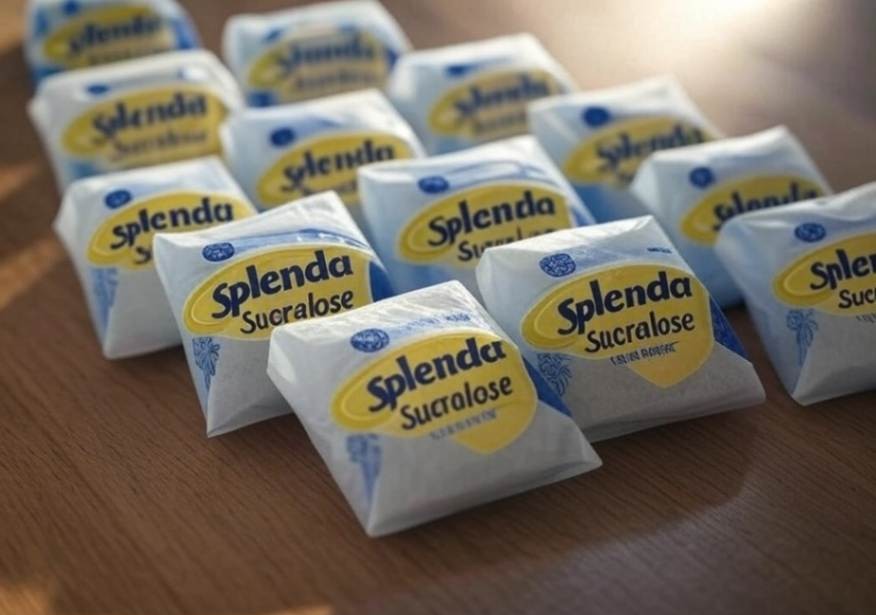
Sucralose impairs mouse immune responses, and WHO has advised people not to use sucralose
A recent study, published in the Nature, provides evidence that high doses of sucralose — a calorie-free sugar substitute that is 600 times sweeter than sucrose and approved by the Food and Drug Administration (FDA) for use as a general-purpose sweetener — can limit immune responses in mice.
Sucralose is generally regarded as safe — the reason why the FDA has approved it.
However, of late, concerns have been raised about the long-term safety of certain sweeteners. In line with these concerns, the latest study has shown that intake of high doses of sucralose in mice results in “immunomodulatory effects by limiting T cell proliferation and T cell differentiation”.
The lead author from the Francis Crick Institute, London and other researchers have now shown that sucralose affects the membrane order of T cells, accompanied by a reduced efficiency of T cell receptor signalling and intracellular calcium mobilisation.
T cell responses
When mice with subcutaneous cancer and bacterial infection were given a dose of sucralose, which is higher than what humans consume daily, it resulted in impaired T cell responses; mice in the control group did not show any reduction in T cell responses. Also, when the researchers stopped feeding the mice in the intervention group with sucralose, the T cell responses began to recover, thus clearly indicating the link between sucralose and impaired T cell responses.
“Overall, these findings suggest that a high intake of sucralose can dampen T cell-mediated responses, an effect that could be used in therapy to mitigate T cell-dependent autoimmune disorders,” they write.
Unexpected result
“Our findings do not provide evidence that normal sucralose intake is immunosuppressive, but they do demonstrate that at high (but achievable) doses, sucralose has an unexpected effect on T cell responses and functions in autoimmune, infection as well as tumour models,” they write.
However, they note that the study cannot exclude the possibility that sucralose may affect T cells through “additional mechanisms, such as epigenetic changes in response to long-term sucralose exposure or an ability to modulate taste receptors that are not shared with other sweeteners”.
Though they did not observe major changes in the microbiome, they say that it is “likely to contribute to the overall response to sucralose intake”.
UPDATE:
On May 15, 2023, the World Health Organization advised people not to use non-sugar sweeteners, including sucralose, for weight loss. The WHO said the “recommendation applies to all people except individuals with pre-existing diabetes.” The recommendation is based on a systematic review of scientific evidence. The WHO also said: “Results of the review also suggest that there may be potential undesirable effects from long-term use of NSS [non-sugar sweeteners], such as an increased risk of type 2 diabetes, cardiovascular diseases, and mortality in adults.” The global health agency mentioned the common non-sugar sweeteners, which include acesulfame K, aspartame, advantame, cyclamates, neotame, saccharin, sucralose, stevia and stevia derivatives.
“Replacing free sugars with NSS [non-sugar sweeteners] does not help with weight control in the long term. People need to consider other ways to reduce free sugars intake, such as consuming food with naturally occurring sugars, like fruit, or unsweetened food and beverages,” Francesco Branca, WHO Director for Nutrition and Food Safety said in a release. “NSS [non-sugar sweeteners] are not essential dietary factors and have no nutritional value. People should reduce the sweetness of the diet altogether, starting early in life, to improve their health.”
Published in The Hindu on March 18, 2023