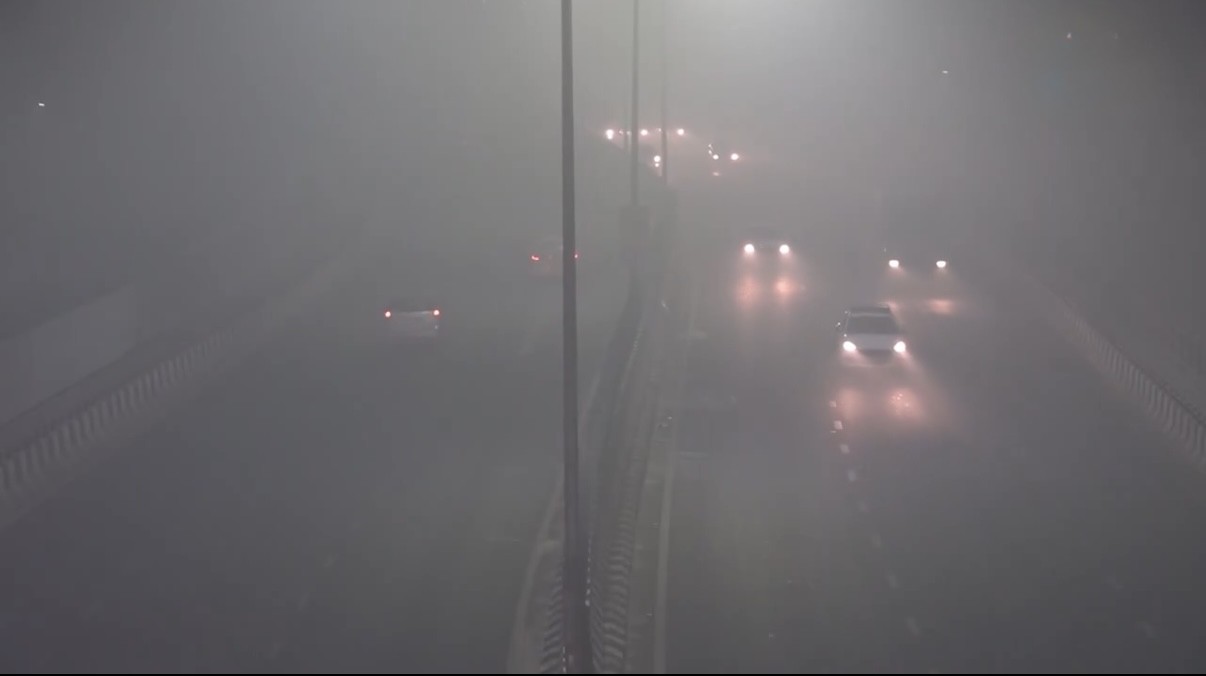
A Governance Issue: Delhi’s Air Pollution Will Remain Critically Severe Unless We Change Course
Delhi’s air pollution is a chronic issue, exacerbated by weak governance, fragmented institutions, and insufficient enforcement of environmental standards. Despite some temporary improvements due to weather during certain years, the underlying sources of pollution remain unaddressed. Without significant changes in funding, authority, and coordinated action, long-term air quality improvements will remain elusive
Delhi and much of North India breathe polluted air throughout the year; winter simply makes it impossible to ignore. As atmospheric dispersion weakens, emissions from vehicles, construction, industry, power generation, and waste burning accumulate near the ground. Air quality slips from “bad” to “severe,” haze thickens, and public anger surges.
Some years bring a brief reprieve. Stronger winds, more rainfall, or better atmospheric mixing disperse pollutants for days or even weeks. Pollution levels fall, headlines soften, and it begins to look like progress.
It usually isn’t. When enough of these weather-driven low-pollution days accumulate, they pull down the annual average and create the illusion of improvement. But the underlying sources remain structurally unchanged. When the weather turns, pollution rebounds. The crisis does not end — it fades from view.
That illusion collapses when the record is examined. Delhi has been violating India’s air quality standards for well over a decade. The national limit for annual PM2.5 — 40 micrograms per cubic meter — has been in force since 2009. Since then, citywide averages have remained far above it in most years. Across the wider Indo-Gangetic Plain, monitoring shows a similar pattern: chronic exceedance extending across entire calendar years, not just winter episodes.
Polluted air in Delhi, then, is not a seasonal emergency. It is a sustained breach of the country’s own environmental standards.
The constraint is institutional
Delhi’s air pollution problem is not mysterious. The major sources are well established: road transport, construction dust, industrial activity, power generation, biomass use in households, and seasonal crop-residue burning in surrounding states. Geography worsens the impact, but geography is not destiny.
At this stage, India does not lack diagnosis. Air pollution is visible. Monitoring data is widely reported. Source contributions have been studied repeatedly. No new scientific breakthrough is required to understand what drives the problem, and the core technologies needed to reduce emissions already exist.
What is missing is institutional capacity. Air pollution at this scale cannot be addressed through isolated technical fixes or short-term schemes. It requires clear authority, aligned incentives across sectors, and sustained enforcement. Those conditions remain weak.
As a result, the systems governing pollution sources continue to push emissions upward. Vehicle numbers rise as transport policy still prioritises private mobility, while public transport capacity, last-mile connectivity, and enforcement lag behind demand. Construction dust remains widespread because urban local bodies lack both the capacity and the incentives to enforce compliance across thousands of sites. Industrial emissions persist because pollution control boards are understaffed, under-resourced, and politically constrained. Crop-residue burning continues because farmers face misaligned incentives, uneven access to alternatives, and uncertain compensation. These are not technical gaps. They are governance choices.
Why the system struggles to change
Air pollution affecting Delhi is a regional problem, but governance remains fragmented across departments, states, and ministries with overlapping mandates and weak coordination. Transport, power, industry, urban development, and agriculture operate with separate budgets, targets, and incentives. No institution is consistently held accountable for ambient air-quality outcomes.
Coordination mechanisms exist, but they lack the enforcement authority, stable funding, and political backing required to deliver large, sustained emission reductions across the airshed. In this vacuum, courts intervene during crises, governments announce emergency restrictions, and long-term reform is deferred. Crisis management substitutes for institution-building.
This fragmentation is reinforced by weak integration between data and decision-making. Emissions inventories and source-apportionment studies vary in methodology, are updated infrequently, and are rarely embedded into budgeting or enforcement. As a result, funding is poorly linked to impact, and accountability remains diffuse.
How other countries tackled the problem
Other countries have faced air-pollution crises at comparable levels of severity. The turning point did not come from better science or breakthrough technology. It came when governments accepted that pollution was a systemic failure — and treated it as such.
China’s experience is the clearest recent example. By the early 2010s, major Chinese cities were recording pollution levels comparable to, and in some cases worse than, those seen in Delhi today. The sources were already known. What followed was not another round of studies, but a political decision to act at scale. China backed its clean-air plans with sustained funding running into trillions of yuan, imposed binding targets on local governments, strengthened enforcement agencies, and accepted short-term economic and political costs in exchange for long-term public-health gains.
Earlier, cities in the United States and Europe went through similar transitions. In the mid-20th century, urban air pollution in London, Los Angeles, and other industrial centres was severe and persistent. Improvement came only after governments introduced strong laws, empowered regulators, restricted polluting activities, and invested heavily in cleaner energy and transport—often amid resistance from industry and voters. Progress was gradual, but it was real and sustained. The common thread across these cases was governance backed by money and authority.
Funding, time, and a locked-in future
This history also sets expectations for Delhi’s future. China’s clean-air turnaround did not happen quickly. Even after committing resources at scale—investment equivalent to roughly 2-4% of GDP spread over multiple years — it took close to a decade for sustained improvements in urban air quality to become visible across major cities. That progress followed years of institution-building, enforcement, and politically difficult decisions.
India has not yet begun a comparable transition. Dedicated clean-air funding remains well below 0.1% of GDP, enforcement capacity is limited, and institutional authority remains fragmented. Even if India were to dramatically scale up action today, meaningful and sustained reductions would take time.
Without such a step-change, it is difficult to see how average air pollution levels in Delhi will improve significantly over the next ten years. At best, pollution peaks may fluctuate. Structural improvement requires time — and India has not yet started the clock.
The likely trajectory
If current trajectories persist, monitoring will improve and individual sources may show incremental gains. But without a step-change in governance, funding, and enforcement, large and sustained reductions in average air pollution levels are unlikely. Delhi’s residents will continue to breathe unhealthy air — not because solutions are unknown, but because the systems required to deliver them have not been built.