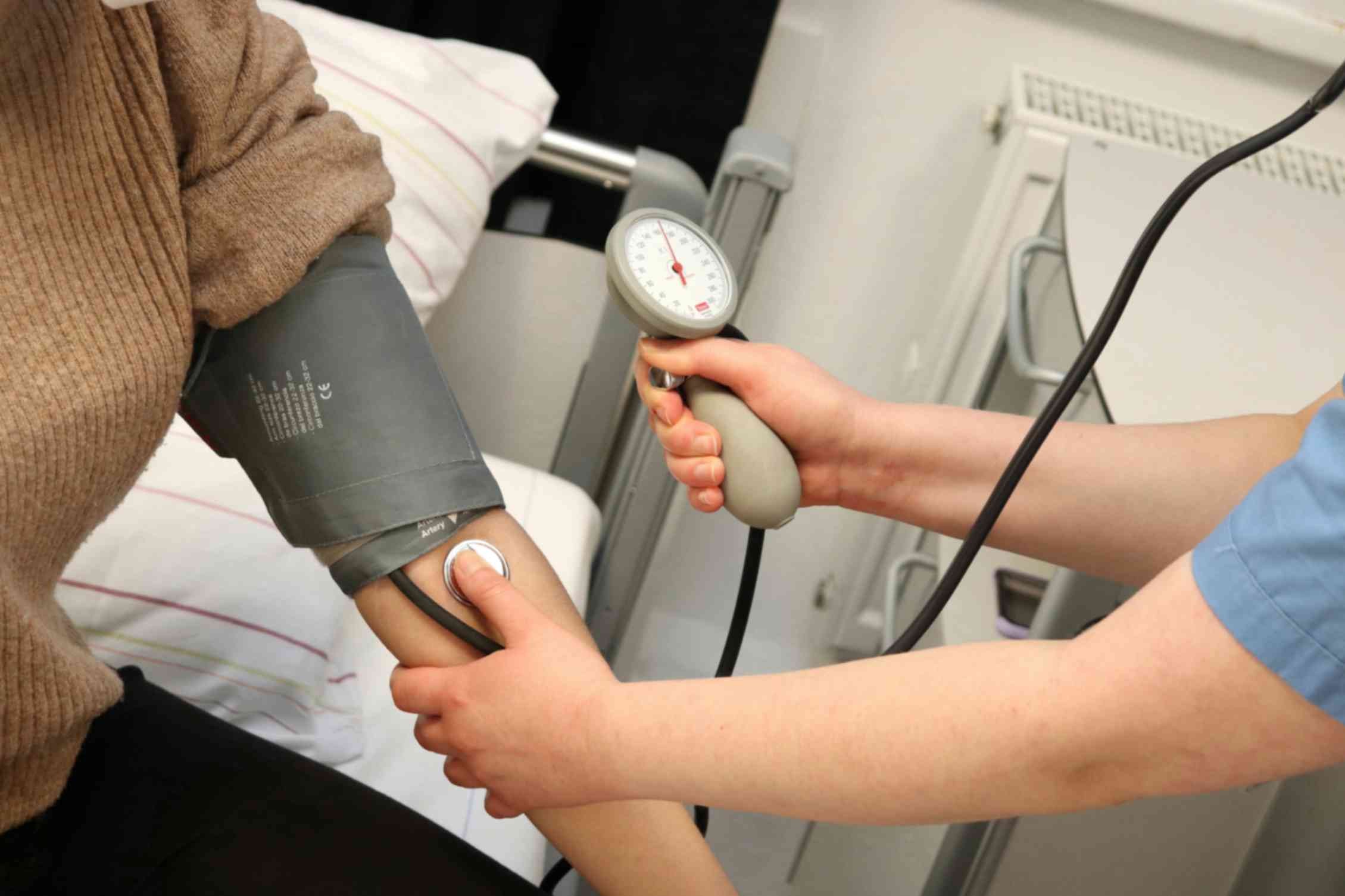
India Hypertension Control Initiative: Only 44% of one million on treatment in 15 States had blood pressure under control
The IHCI study found that individuals aged 45-54 years had a higher risk of uncontrolled BP compared with those aged over 55 years. And compared with females, males had a higher risk of uncontrolled BP, and those with diabetes exhibited a higher risk. Also, individuals who were already on treatment at the time of registration had a higher risk of having uncontrolled BP
Only 44% of one million people who were treated for hypertension during the period 2018-2022 in public sector health facilities in 89 districts across 15 States in India had blood pressure under control, a new analysis of the India Hypertension Control Initiative (IHCI) reveals. The percentage of people with BP under control varied from 26% to 57% in various types of health facilities in the 15 States. While over 50% of individuals in Maharashtra, Punjab and Rajasthan had BP under control, Nagaland, Jharkhand and Bihar brought up the rear with less than 25% of individuals with blood pressure under control. The results were published on November 28, 2025 in the journal BMJ Open.
The 15 States where the IHCI programme has been rolled out include Andhra Pradesh, Bihar, Goa, Gujarat, Jharkhand, Karnataka, Maharashtra, Nagaland, Puducherry, Punjab, Rajasthan, Sikkim, Tamil Nadu, Uttar Pradesh and West Bengal. The IHCI programme is not operational in all districts in the 15 States.
Reasons for poor show
Explaining the reason for lower percentage of individuals with controlled blood pressure in Bihar, Nagaland, and Jharkhand, Dr Parasuraman Ganeshkumar from the ICMR-National Institute of Epidemiology (ICMR-NIE), Chennai and the corresponding author of the paper says in an email: “The major reason was higher missed-visits proportions in these States. Higher the missed visits to check and refill the medications, the higher the lack of adherence to medications leading to poorer control.”
The IHCI programme was rolled out in two phases, with districts in Maharashtra and Punjab belonging to Phase I that began in January 2018, while the programme in the remaining 13 States began under Phase II (between August 2019 and September 2021). Besides missed visits leading to poorer control, the early start of the programme in Maharashtra and Punjab under Phase I also likely contributed to better outcomes.
“Phase I States had better BP control than Phase II States. Earlier start (Phase I) meant more time to institutionalise protocols, decentralise to HWCs/PHCs, stabilise medicine supply, and build cohort monitoring, which plausibly contributes to the better control seen in Maharashtra and Punjab,” Dr. Ganeshkumar says. “Rajasthan’s better control reflects strong Phase II implementation despite a later start.”
According to him, the results of the study apply only to the 15 States where the IHCI programme has been implemented. “The data is large and geographically diverse, the findings are reasonably generalisable to public-sector hypertension programmes in similar Indian settings, but they do not directly represent private-sector care or non-IHCI implemented States,” Dr. Ganeshkumar says.
Single versus two readings
The study found that BP control declined when two-visit readings were taken into consideration instead of a single recent reading. Using the last/recent visit BP control only classifies anyone whose BP happened to be less than 140/90 mm Hg at that visit as controlled, even if the previous visit was high. However, when the definition is tightened to require control at both the recent and second last visits, the proportion of individuals with controlled BP drops by 16 percentage points (from 68% on one reading to 52% for two readings).
According to Dr. Ganeshkumar, the drop in the proportion of individuals with controlled BP when two readings were taken into consideration arises because it excludes those with intermittent control, adherence lapses, or dose titration in progress. “The two-reading criteria is more realistic and explains the sustained control over roughly one-two months, not a decline caused by the recent interventions alone,” he says.
Risk factors of uncontrolled BP
The study analysed the risk factors for uncontrolled BP in about 6,68,000 individuals whose readings were measured between January and March 2022. Based on two blood pressure readings, individuals aged 45-54 years had a higher risk of uncontrolled BP compared with those aged over 55 years. And compared with females, males had a higher risk of uncontrolled BP, and those with diabetes exhibited a higher risk. Also, individuals who were already on treatment at the time of registration had a higher risk of having uncontrolled BP as compared with those who were newly initiated on treatment at registration.
Among individuals already on antihypertensive drugs at the time of registration, only 39% had BP under control. “This could be probably due to underdosing, other comorbidities (e.g., 26% overall had diabetes), poor adherence, or fragmented pre-IHCI care. Additionally, achieving blood pressure control requires time, titration, and adherence to medication,” explains Dr. Ganeshkumar. “However, earlier IHCI publications from Phase I States showed substantial improvements in BP control over time after the introduction of standard protocols and continuous medication supply, implying that IHCI improved control even among previously treated but uncontrolled individuals.”
According to him, there are several pathways for low BP control in males and young people. “Probably, men and younger adults have higher prevalence of behavioural risks (smoking, alcohol, obesity, high salt), poorer adherence, fewer clinic visits, and lower risk perception, all contributing to lower sustained BP control despite treatment,” he says.
Importantly, there was 1.5-two times higher risk of uncontrolled BP at the district level and block-level health facilities compared with Health and Wellness Centres, which catered to a few villages. As per the study, even in the early phase of the project, the researchers observed that higher-level health facilities had just 35% control of BP compared with l42% seen in lower-level health facilities in 26 districts during phase I of the programme. The same pattern was seen even after the project was expanded from five to more than 15 States. “The possible reasons for high uncontrolled BP at higher level facilities might be the likelihood of complex cases which are being referred and the inability to recall the patients who did not visit regularly due to lack of outreach community health workers,” the authors write.
The WHO target for 2025
The WHO NCD Global Monitoring Framework requires countries to achieve 25% relative reduction in the prevalence of raised blood pressure by 2025 with a baseline of 2010. The current study cannot tell whether India is on track to meet the WHO goal by the end of this year. “In order to ascertain whether we have achieved the 25% relative reduction by 2025 with a baseline of 2010, we need population-level survey to be conducted to measure the prevalence of raised blood pressure. Our data mentioned in the paper focuses on treatment and control among diagnosed, treated patients in public facilities, not on population prevalence trends over time. It therefore cannot establish whether India as a whole is on track for the 25% prevalence-reduction target,” says Dr. Ganeshkumar.