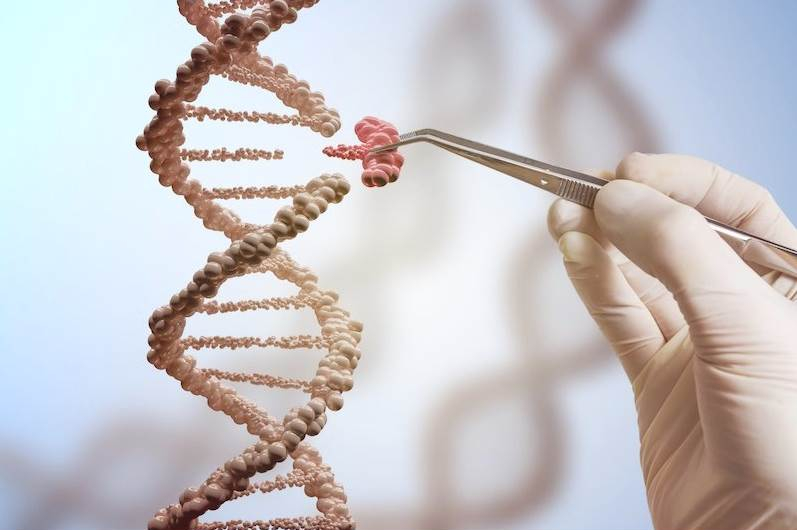
CSIR-IGIB’s CRISPR genome editing system: Raising the bar with 1,300-fold higher specificity, strong on-target editing
In a detailed interview to the Science Chronicle, Dr. Sundaram Acharya formerly with CSIR-IGIB and currently a JSPS postdoctoral fellow at the University of Tokyo, and co-inventor of enFnCas9, explains how and why the indigenously developed CRISPR genome editing system using the enhanced FnCas9 (enFnCas9) variants fare better than the existing Cas9 tool — about twice the DNA cleavage speed, a nearly 3.5-fold broader target range in the human genome, and much stronger editing activity with excellent genome-wide specificity
Breaking free from licensing fees, usage caps, and jurisdictional restrictions while using the SpCas9 gene editing protein, India’s first indigenously developed CRISPR genome editing system using enhanced FnCas9 (enFnCas9) variants — enFnCas9 — has far higher specificity that the existing SpCas9 protein while retaining the strong on-target editing efficacy. The work was conceptualised and driven by CSIR-IGIB’s Dr. Sundaram Acharya under the scientific leadership of Dr. Debojyoti Chakraborty.
The team engineered a class of kinetically enhanced variants of Francisella novicida Cas9 (FnCas9), achieving significantly improved precision and efficiency in genome editing. The work has been granted a U.S. patent, making it one of India’s earliest internationally protected CRISPR assets. In a major step towards commercialising the tool, the technology has been licensed to the Serum Institute of India.
The study published in Nature Communications in 2024 was recently conferred the DHR-ICMR Health Research Excellence Award 2025 (Gold). The recognition by DHR-ICMR underscores more than a single breakthrough. It reflects a strategic shift: India is moving from being an adopter of gene editing tools to a creator of original, proprietary, globally competitive CRISPR technologies.
In a detailed interview to the Science Chronicle, Dr. Sundaram Acharya of formerly with CSIR-IGIB and currently a JSPS postdoctoral fellow at the University of Tokyo explains in an email how and why the indigenously developed CRISPR genome editing system using the enhanced FnCas9 (enFnCas9) variants fare better than the existing Cas9 tool.
What is the reason for higher off-target effect in the case of SpCas9? How was this resolved in the case of FnCas9?
The Cas9 is a multidomain-containing enzyme with two major structural lobes: the REC lobe, which ‘reads’ the RNA-DNA pairing, and the NUC lobe, which performs the cut. These two lobes talk to each other, and the enzyme only activates when the pairing looks correct.
In SpCas9, this internal checkpoint is relatively weak. It can activate even when the RNA and DNA don’t match perfectly, which is why SpCas9 cuts at the similar-looking sites, the classic off-target problem.
On the contrary, FnCas9 behaves very differently. Its checkpoint for sensing mismatches is far stricter, and the nuclease doesn’t activate unless the RNA-DNA pairing is from almost perfect to perfect. This built-in rigidity is why FnCas9 shows exceptionally low off-target activity.
Importantly, this is not accidental and it comes from its evolutionary lineage. FnCas9 belongs to the Type II-B branch of Cas9 enzymes, which naturally evolved tighter proofreading than the Type II-A group that SpCas9 comes from.
In short, SpCas9 tolerates mismatches which FnCas9 refuses to. Their evolutionary divergence is the reason.
What is the role of the protospacer adjacent motif (PAM) and how does sgRNA sequence help find a perfect match?
In bacteria, PAM is the signal Cas9 uses to distinguish viral DNA from its own. It prevents the organism from accidentally cutting its own genome.
When we use Cas9 for genome engineering, this same feature becomes a limitation, because Cas9 can only act on DNA sequences that sit next to the correct PAM. That restricts where edits can be made.
Once Cas9 finds a PAM, the nearby DNA unwinds. One strand then tries to pair with the guide RNA sequence through standard base-pairing rules. If the match is perfect, Cas9 activates.
But in reality, some Cas9 enzymes can still tolerate mismatches in this RNA-DNA pairing, and that tolerance is what leads to off-target edits.
In short, PAM tells Cas9 where to look, while the guide RNA tells Cas9 exactly where to bind. In other words, PAM is the street address Cas9 uses to reach the right neighbourhood; the guide RNA is the exact door number it checks before entering. The system works best when the pairing is perfect and off-target effects happen when Cas9 tolerates imperfections.
Does FnCas9 use the simple PAM requirement (5′-NGG-3′) like SpCas9? If so, what helps increase the specificity and reduce the off-target effect of FnCas9?
Yes, FnCas9 uses the same NGG PAM as Streptococcus pyogenes (SpCas9), meaning NGG appears at the similar frequency in the human genome, roughly once every 16 bases. But PAM itself is not what drives off-target effects. It only tells Cas9 where to start looking. What actually gives FnCas9 its high specificity is what happens after PAM recognition. FnCas9 is far stricter when it checks the RNA-DNA pairing. Its REC3 domain makes more contacts with the heteroduplex than SpCas9, allowing it to detect even small mismatches and disengage before cutting. So even though the predominant PAM requirement is identical, FnCas9’s internal proofreading is much more stringent which makes it remarkably specific.
What was the purpose for developing three enFnCas9 variants and how were the variants developed?
The outstanding challenge in the field was the trade-off between activity and specificity of Cas9 enzymes meaning tuning one property comes at the cost of another. To break that trade-off, we used structure-guided protein engineering. We designed and tested 49 different engineered versions of FnCas9, each with targeted changes based on its 3D structure. From that large pool, we selected three enhanced variants that met multiple criteria:
- Higher editing kinetics on both the standard NGG PAM and broader NRG/NGR PAMs
- Altered PAM recognition, expanding targetability, and
- Distinct mechanisms of action, giving us complementary strengths instead of one-size-fits-all
In short: We created three enFnCas9 variants because a single design can’t solve every editing challenge. Each variant enhances FnCas9 in a different, rationally engineered way while keeping its hallmark precision intact.
How are the three enFnCas9 variants better than the original FnCas9?
The enhanced FnCas9 variants show clear performance gains: about twice the DNA cleavage speed, a nearly 3.5-fold broader target range in the human genome, and much stronger editing activity with excellent genome-wide specificity. One of these variants — en31 — allowed us to build an adenine base editor, a tool that changes a single letter in DNA without breaking the double helix. This is crucial for correcting many disease-causing mutations safely.
We also introduced a key conceptual advance: by simply extending the guide region of the sgRNA, we could tune the base editing window. This gives precise control over where the edit happens and makes it possible to target over 99% of pathogenic single-nucleotide variants in humans theoretically.
How does the efficacy and specificity of the three enFnCas9 variants improve compared with SpCas9? Is the specificity of the enFnCas9 variants seen genome-wide in human cells?
We benchmarked our editing efficiency and specificity assays against SpCas9 and its engineered derivatives. Using whole genome sequencing-based assay to measure off-targets across the entire human genome, we found that the enFnCas9 variants delivered up to about 1,300-fold higher specificity than SpCas9.
So yes, the improved accuracy isn’t limited to a few sites instead at the genome-wide level.
What makes the enFnCas9 variants fare better than SpCas9 in terms of specificity and thus reduced off-target effect?
Our engineering strategy hit the rare sweet spot where FnCas9’s activity was increased without losing its natural specificity. The enzymatic properties between FnCas9 and SpCas9 were different at the fundamental level. SpCas9 is naturally very active but highly promiscuous and boosting its specificity usually comes at the cost of performance. The FnCas9 is the opposite — less active but inherently extremely precise. That contrast meant our engineering approach had to follow a completely different logic than the strategies used for SpCas9. The mechanistic basis is our follow up story, so stay tuned!
How do high-fidelity SpCas9 proteins fare compared with enFnCas9 variants?
High-fidelity SpCas9 variants do improve specificity compared to the SpCas9, but they generally lose a significant amount of on-target activity in the process. The enFnCas9 variants behave very differently. They maintain strong on-target editing while delivering much higher specificity, capable of discriminating mismatches down to a single nucleotide. None of the high-fidelity SpCas9 versions demonstrated this level of single-base precision. In short, high-fidelity SpCas9 variants trade activity for accuracy while enFnCas9 variants deliver both.
Does the increased specificity of enFnCas9 variants affect the on-target efficacy? If not, how was the specificity increased without affecting the on-target efficacy?
FnCas9 is naturally very specific but not very active. The goal of engineering was to boost its activity without disturbing the precision that makes it unique. We achieved this by making targeted changes in two regions: the PAM-duplex binding domain (WED-PI), which helps the enzyme engage DNA more efficiently and the phosphate lock loop (PLL), which improves the double-strand DNA unwinding. So, robust activity does not come at the cost of specificity.
Is on-target editing efficiency up to 45% using two enFnCas9 variants without a concomitant increase in off-target effect sufficient for therapeutic use?
The enFnCas9 variants deliver very strong performance: over 90% gene-editing efficiency and about 70% adenine base editing efficiency. At one of the most challenging genomic sites we tested, the FANCF1 locus, which has a nearly identical off-target site differing by just one nucleotide: enFnCas9, en15 achieved about 45% on-target editing with only about 1% activity at the off-target. That level of discrimination is extremely rare. In contrast, high-fidelity SpCas9 variants failed to distinguish between the two sites, showing roughly 30% on-target and 26% off-target editing, essentially treating both as the same. This gives enFnCas9 an exceptionally high on-target/off-target ratio, one of the most important metrics for safe, precise genome editing.
How much better was the on-target editing of enFnCas9 variants in different human cell types across multiple compared with SpCas9 proteins?
enFnCas9 variants were clear winners when benchmarked against high-fidelity SpCas9 variants across diverse human genes in terms of activity and for highly promiscuous off-target sites. Similarly, enFnCas9 variants demonstrated similar to better editing efficiency when compared with SpCas9 across multiple loci and human cell types with superior specificity profile.
We did not use a large-scale library screen to quantify median editing efficiency across hundreds to thousands of genomic loci, so giving a single numerical value will not be correct. But in every direct, site-by-site comparison we performed, enFnCas9 matched SpCas9’s activity and exceeded in precision targeting.
How were the versatility and usefulness of enFnCas9 improved for use at any site of the human genome?
For a Cas9 enzyme to be broadly useful, it must hit two things at once: robust activity and high specificity. The enhanced FnCas9 variants achieve both while expanding the number of editable sites in the human genome by about 3.5-fold. In SpCas9, expanding PAM flexibility almost always comes with a drop in specificity. enFnCas9 breaks that pattern completely.
Has the therapeutic potential of enFnCas9 variants been demonstrated? Any reason why eye-related diseases were targeted for therapeutic potential? What other diseases can be treated by using enFnCas9 variants?
Yes, the therapeutic potential has already been demonstrated using an enFnCas9-based adenine base editor, showing precise, break-free correction of disease-relevant mutations. Eye diseases were an early target for a practical reason: the eye is a closed, accessible, immune-privileged organ, which makes it one of the safest places to test the new genome editing platform for quicker therapeutic translation.
But the scope is much broader because enFnCas9 supports knock-outs, knock-ins, and base editing. It is theoretically applicable to any genetic disease where correcting a mutation, disabling a harmful gene, or inserting a therapeutic sequence can provide benefit. So, the eye disorder was a strategic first step, not a limitation; the platform is generalizable across genetic disorders.
The therapeutic potential of enFnCas9 variants has been tested in vitro. Is the therapeutic potential being tested on animals?
Yes. The next stage of testing is already underway. Dr. Debojyoti Chakraborty’s lab at CSIR-IGIB is advancing enFnCas9-based therapeutic strategies. One of the lead efforts focuses on sickle cell disease correction, in collaboration with clinical partners, along with parallel work on other genetic disorders including India’s first personalized treatment of an extremely rare neurogenetic condition called familial encephalopathy with neuroserpin inclusion bodies (FENIB).
Very recently, enFnCas9 technology was transferred to Pune-based Serum Institute of India to scale up the engineered enFnCas9 CRISPR platform into affordable therapies for Sickle Cell Disease and other critical genetic disorders. The world-class, low-cost gene editing solution named “BIRSA 101”, in honour of Bhagwan Birsa Munda, remembered as a great tribal freedom fighter, was launched by Union Minister of State (Independent Charge) for Science and Technology Dr. Jitendra Singh. It is a major step forward for an indigenous CRISPR-based gene therapy for Sickle Cell Disease, a condition that disproportionately affects India’s tribal communities.
Can enFnCas9 variants be used as a gene-editing tool in agriculture too?
Yes. Of course.
Will the development of enFnCas9 variants free up India from patent-related constraints of CRISPR-Cas9?
The whole point of enFnCas9 was to stop India from being permanently dependent on the original SpCas9 IP estate. Global CRISPR patents are a minefield; every serious application, therapeutic or diagnostic, runs straight into licensing fees, usage caps, and jurisdictional restrictions. That’s the tax we’ve been paying for using someone else’s discovery.
What we built with enFnCas9 variants is our way out of that. The enFnCas9 enzymes are protected by a U.S. patent. That means India finally owns an indigenous CRISPR platform that companies can license without walking into the Berkeley-Broad patent war.
So yes, it reduces the dependency. More importantly, it shifts India’s position from ‘borrower’ to ‘builder’ in genome editing, a watershed moment for India’s CRISPR sovereignty.