Beyond Iodine Levels: The Genetics of Thyroid Health in Indian Adolescents
A study of over 4,800 Indian adolescents found that 16.1% had subclinical hypothyroidism and 1.1% had clinical hypothyroidism. Subclinical and clinical hypothyroidism in adolescents were not linked to obesity but to dyslipidemia and altered levels of adiponectin, suggesting early metabolic disruptions even before visible changes in body weight
Thyroid problems are often thought as an adult issue — tired office workers, women struggling with weight, or older adults battling slow metabolism. But what if these problems begin much earlier? What if the seeds are planted in childhood, quietly growing before anyone notices? Our study in over 4,800 Indian adolescents (nine to 18 years old) in the Delhi-NCR region, published in the Journal of Human Genetics, addresses these questions.
What are thyroid hormones?
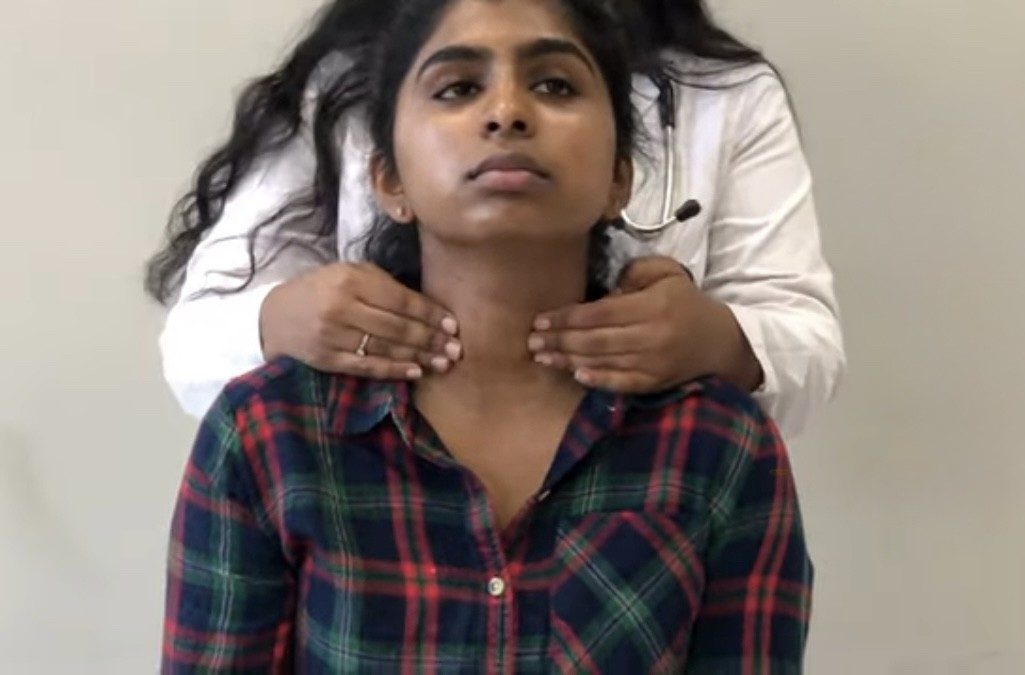
The thyroid is a small, butterfly-shaped gland located at the base of the neck. It plays a crucial role in the body’s metabolism, regulating energy levels, cardiovascular functions and even growth during childhood. Thyroid hormone levels are influenced by a complex combination of genetics, nutrition, environmental exposures, and socioeconomic conditions.
Three hormones orchestrate this delicate system. Thyroxine (T4) is the main hormone released by the thyroid, circulating mostly in an inactive form and serving as a reserve for producing the active hormone triiodothyronine (T3). Thyroid-stimulating hormone (TSH), secreted by the pituitary gland, regulates thyroid hormone production. When T3 and T4 level drops, TSH rises to stimulate its production, and TSH level decreases when there is a rise in the T3 and T4 level.
Circulating levels of TSH, T4, and T3 are indicators of thyroid function. Total T3 and T4 include both protein-bound and free (active) forms. Free T3 (FT3) and free T4 (FT4) measure specifically the unbound, biologically active hormones, which are directly relevant to physiological processes.
Early signs of metabolic disruption
In our study population, 16.1% of adolescents had subclinical hypothyroidism and 1.1% had clinical hypothyroidism. Subclinical hypothyroidism is when the T3 and T4 levels look normal, but the TSH is slightly high, showing an early or mild problem. In clinical hypothyroidism, TSH is high and thyroid hormone levels are low, causing clear symptoms. Interestingly, these conditions were not linked to obesity in Indian adolescents. However, thyroid hormones were linked to dyslipidemia and altered levels of adiponectin, suggesting early metabolic disruptions even before visible changes in body weight.
Does socio-economic status influence thyroid levels?
To understand environmental influences, we examined thyroid levels across adolescents from three school types representing a socioeconomic gradient: rural schools (lower income), urban government schools (middle), and urban private schools (higher socioeconomic status). This gradient not only represents income differences but also reflects variations in nutrition, environmental exposure, and access to healthcare.
We observed that rural adolescents had the lowest levels of FT4, while urban government school students had the highest. Private school students fell in between but displayed more heterogeneous thyroid profiles, with some resembling rural students and others more like government school students. Nutrition likely contributes to this pattern. Rural adolescents often have limited dietary diversity and higher deficiency of micronutrients essential for thyroid health. The National Iodine Survey of India (2018-2019) reported higher iodine levels in urban areas compared to rural, which may explain the higher FT4 levels among urban government school students. Private-school children show more variation in thyroid levels because their diets and daily routines can differ widely. Many consume more processed or ultra processed foods, have lower micronutrient diversity in diet, and have a sedentary lifestyle. These lifestyle patterns affect overall metabolism and, over time, can influence thyroid function. In fact, the consumption of ultra processed foods has been linked to thyroid dysfunction. This is why, despite their privileged background, some urban children may show lower levels FT4 similar to those seen in rural children.
The FT3 levels overlapped across school types, likely because FT3 stays relatively stable across different nutritional and environmental conditions. Even in early thyroid dysfunction, body often maintains normal FT3 for some time by prioritising its production, which is why FT3 may not vary much across socio-economic status.
Does genetics influence thyroid levels?
Genes carry instructions for making proteins. Small changes in DNA sequence called genetic variants, especially single nucleotide polymorphisms (SNPs) involving alterations in DNA sequence at a single base level, can influence thyroid function. Such variants in genes related to thyroid hormone synthesis, signalling, transport, and metabolism can affect the thyroid profile.
Studies have shown that about 65% of variations in thyroid function can be explained by genetics. However, existing genetic studies, mostly focused on the European population, explain only a small portion of this heritability. Including understudied ethnic groups such as the South Asians in genetic studies could help capture more genetic associations involved.
We employed Genome-Wide Association Studies (GWAS) in 4,854 children to scan millions of common genetic variants across the genome and check for their association with thyroid profile. GWAS identifies common variants each with a small effect on thyroid levels. We also conducted Exome-Wide Association Studies (ExWAS) in over 4,300 children, which focus on protein-coding regions of the genome where rare but highly impactful variants reside. This approach allowed us to identify variants with larger effects resulting in changes that can directly alter protein structure, offering insights into functional mechanisms.
Our study is the only ExWAS on thyroid traits globally and the first GWAS on thyroid traits in the South Asian population. This approach combining both GWAS and ExWAS for thyroid traits (FT3, FT4 and TSH) allows us to capture the full spectrum of genetic variation — from common variants with modest effects to rare, high-impact variants, providing a better understanding of the genetic architecture of thyroid function in Indian adolescents.
Findings
The GWAS revealed novel associations for TSH (ACTL7B) and FT4 (LINC00648, YTHDC1, and C2CD4B) at near-GWAS significance threshold. The ExWAS that scanned over 41,000 variants identified two novel variants for TSH in GYS2 and CEP162 and 15 novel variants associated with FT4 — ZNF467, P3H3, CRLF3, SPATA2L, MEFV, THNSL2, COL27A1, COL28A1, IGSF3, ZNF732, MOG, GABBR1, HPF1, LOC440563, and SPEG. Some known associations for thyroid in FOXE1 and IGFBP5 were also replicated in our study. Of the 15 novel variants associated with FT4, 10 were either monomorphic or rare in European populations, emphasising the need for population-specific research. The findings from one population do not always transfer to another. Personalised thyroid care must therefore be informed by studies that reflect the unique genetic and environmental context of each population.
Why these findings matter for Indian adolescents
With India’s universal salt iodization programme, iodine deficiency — once the major driver of thyroid problems — has sharply declined. Today, genetic factors, lifestyle, and metabolic health play a huge role in shaping thyroid profiles.
Adolescents from higher socioeconomic backgrounds may benefit from lifestyle-focused interventions, including balanced diets and active lifestyle. For South Asian populations, the newly identified genetic variants form a foundation for future tools in early detection, risk prediction, and personalised thyroid care. These findings push us closer to equitable precision medicine, where recommendations are tailored to the unique genetic and environmental landscape of each population. By identifying at-risk children earlier and understanding how Indian genetic architecture differs from that of Europeans, we move toward more proactive and population-specific thyroid care.