
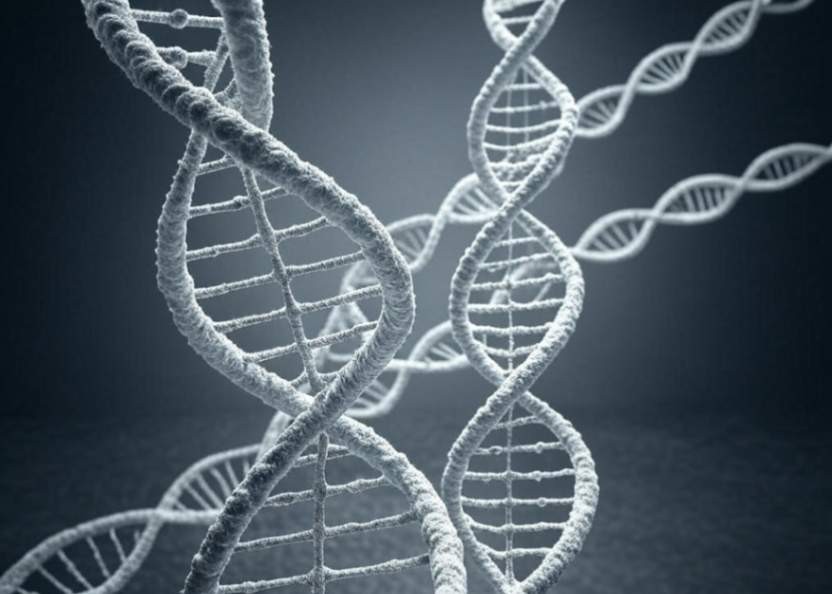
Pharmacogenomics: Tailoring Medicine to Your DNA
Genetic variants can drastically change how certain enzymes (CYP450) work. While some people are fast metabolisers — they break down drugs too quickly before the medicine even has time to act — some others are slow metabolisers: their bodies process drugs too slowly, allowing the drugs to build up to toxic levels
More than 2,000 years ago, the great Greek philosopher Pythagoras, the same mind that gave us the theorem every schoolchild learns, had a peculiar obsession. He warned his followers never to eat fava beans. To him, those innocent-looking beans were dangerous, even deadly. In one story, when his enemies cornered him near a bean field, he chose to die rather than run through it. For centuries, people puzzled over this strange aversion. Was it superstition? A symbol of purity? Some bizarre ritual?
The real answer emerged only in the 20th century. Some people, particularly in the Mediterranean and parts of Asia, have a genetic deficiency in an enzyme called G6PD (glucose-6-phosphate dehydrogenase). When such people eat fava beans, the beans trigger haemolytic anaemia, their red blood cells rupture, leading to fatigue, jaundice, and even death.
Pythagoras, it turns out, was not being mystical, he was being biological. He had likely witnessed people collapsing after eating beans and sensed a pattern long before science could explain it.
That ancient story is one of the earliest clues to a truth we are only now fully embracing: our genes profoundly shape the way our bodies respond to the world around us, food, chemicals, and medicines alike.
When the same pill acts differently
Fast forward 2,500 years from Pythagoras and his mysterious fava beans and picture this: two close friends struggling with anxiety. The same doctor, the same prescription, the same tiny white pill. A week later, one feels calm, while the other person feels foggy, dizzy, and sleepless. It is not stress, coffee or other factors. The truth lies hidden in the DNA.
Similarly, two cancer patients given identical doses of a chemotherapy drug show very different outcome. While one beats the cancer and walks out of the hospital in remission, the other patient ends up in intensive care, battling life-threatening toxicity. Both patients received the same treatment but at the molecular level, their bodies were playing by entirely different rules.
For decades, medicine followed a “one-size-fits-all” philosophy — find a drug that works for most people and prescribe it to everyone. It was simple, practical, and, for a long time, the best we could do. But in reality, human biology does not conform to averages. What is safe for one person may be dangerous for another.
These differences are an outcome of genetic blueprints at work. The science that decodes why the same pill acts so differently from person to person is called pharmacogenomics from “pharmaco” for drugs and “genomics” for genes.
It is not science fiction anymore. It is the new face of medicine teaching us that healing is not about one-size-fits-all prescriptions, but about finding the right medicine for the right person at the right time.
The hidden machinery of drug metabolism
Every medicine goes through a journey in the body. It must be absorbed, processed, and eliminated, and this journey depends on a set of enzymes, like tiny workers in a biochemical factory. Some of these enzymes belong to a famous family called cytochrome P450, or CYP450 for short. These enzymes are coded by genes such as CYP2D6, CYP2C9, CYP2C19, and others.
Here is where the magic and danger lie: small changes (called variants or polymorphisms) in these genes can drastically change how these enzymes work.
Some people are fast metabolisers — they break down drugs too quickly before the medicine even has time to act. Some others are slow metabolisers — their bodies process drugs too slowly, allowing the drugs to build up to toxic levels. This explains why a standard dose may be too much for one person and too little for another.
It is not just about rare diseases or special cases. These genetic differences are common. For example, up to 10% of Indians are slow metabolisers for certain antidepressants and painkillers, while others may over-process drugs like codeine into morphine, causing unexpected sedation or breathing trouble. In other words: the same pill can become poison, placebo, or panacea depending on a person’s DNA.
The Chettiar story: A tragedy that taught a lesson
Medical folklore in India often tells the sobering story of a respected Chettiar gentleman who went in for a routine surgery in Tamil Nadu decades ago. The operation itself was uneventful, a textbook procedure. The anaesthetist administered the standard muscle relaxant used at the time. But when the surgery was over, something went wrong. The patient did not wake up. Hours turned into a day. The breathing tube stayed in. Doctors were baffled that the surgery was perfect, yet the patient remained paralysed.
The culprit was later found to be “pseudocholinesterase deficiency”, a genetic condition in which the enzyme responsible for breaking down certain anaesthetic drugs, like succinylcholine, does not work properly. Without this enzyme, the drug lingers in the bloodstream, keeping the muscles paralysed long after it should have worn off.
That single tragedy became a lesson in medical genetics. Hospitals began to recognise that what appears to be a medical “reaction” may in fact be a genetic predisposition. The incident seeded awareness that has shaped safer anaesthesia practices in India to this day and it perfectly illustrates the promise of pharmacogenomics: to prevent suffering by knowing the genetic script beforehand.
When genes decide life or death
A few fields show the power of pharmacogenomics as clearly as cancer treatment. The chemotherapy drug 5-fluorouracil (5-FU), used for colon, breast, and head-and-neck cancers helps destroy tumour cells in most patients. But in some patients, it triggers catastrophic side effects: uncontrollable vomiting, mouth ulcers, infections, even organ failure.
Scientists discovered the reason: a gene called DPYD. This gene produces an enzyme that breaks down 5-FU. If a person inherits certain DPYD variants, their enzyme activity plummets, and the drug accumulates to dangerous levels.
Today, a simple genetic test can detect DPYD variants before treatment begins. With that knowledge, oncologists can reduce the drug dose or choose alternative therapies reducing toxicity, improving recovery, and saving lives. This is not limited to cancer. Pharmacogenomic testing is now influencing treatment decisions in cardiology (warfarin dosing), psychiatry (antidepressant and antipsychotic response), pain management (opioid metabolism), and even infectious diseases (HIV drug sensitivity).
Each example brings the same message: the best prescription starts with the patient’s genome.
From one gene to the whole genome
For years, pharmacogenomics focused on a few key genes like CYP450, VKORC1, TPMT, and DPYD. Each told part of the story. But the human body is a symphony of interacting genes working together, influencing each other. Enter the era of Whole Genome Sequencing (WGS).
Whole Genome Sequencing reads all three billion letters of the DNA, capturing every variation that might affect the response to thousands of medicines. Instead of testing a handful of genes, doctors can now get a complete pharmacogenomic map for an individual. Imagine this future and it’s already arriving: Before one ever falls ill, the genome is sequenced and securely stored. When a doctor prescribes a medicine, software instantly checks the DNA for drug-response markers. And there is a personalised dose of the right drug at the right time every time. This is precision medicine in its purest form and pharmacogenomics is its heartbeat.
A glimpse of tomorrow’s clinic
Let’s take a glimpse into what a clinic visit might look like a decade from now. A person visits for high blood pressure and the doctor pulls up the person’s pharmacogenomic profile. The report says if the person is a slow metaboliser for certain beta-blockers but responds well to calcium channel blockers.
Instead of trial and error, instead of weeks of adjusting doses and coping with side-effects, one gets the right medicine on the first try. No guesswork. No adverse reactions. Just informed, DNA-guided care.
India’s moment in genomic medicine
India, with its vast population and genetic diversity, stands at a unique crossroads. On an average, each Indian individual carries eight PGx variants meaning millions of people are unknowingly carrying genetic changes that can alter how medicines work for them.
India has one of the richest genetic mosaics on Earth with over 4,000 ethnic groups, each with distinct genetic variations. This makes it both vulnerable and powerful — vulnerable because a “one-size-fits-all” medicine rarely works, and powerful because decoding these differences could revolutionise healthcare for 1.4 billion people.
Institutions and healthcare companies in India are now stepping up. Whole genome sequencing programmes, carrier screening, and pharmacogenomic research initiatives are emerging across the country. Yet, awareness remains low. Most patients and even many doctors still do not realise how much a gene can change a drug’s story.
From awareness to action
We are living through a medical revolution as profound as the discovery of penicillin or the mapping of the human genome itself.
But revolutions need awareness. People need to know that their DNA is not just a code for disease, it is a guide to safer, smarter treatment. Every time one takes a medicine without knowing whether it suits the genes, it is like playing a genetic lottery. Every adverse reaction avoided through testing saves not just money, but suffering, and sometimes, lives.
Your DNA, your prescription
From Pythagoras and his forbidden beans to the Chettiar anaesthesia story, from cancer chemotherapy to the promise of whole genome sequencing, the thread remains the same: our genes hold the instructions for how we live, react, and heal.
Pharmacogenomics reminds us that medicine is not one-size-fits-all. It is as personal as a fingerprint, as unique as a heartbeat.
The next time you see a pill, remember it is not just chemistry. It is a conversation between science and the genome. And in that dialogue lies the future of healthcare where no patient suffers from the wrong drug, and every prescription begins with a whisper from within: “What does your DNA say?”


