
Symptoms Hiding in Plain Sight: The ‘You Are Too Young’ Notion is Lung Cancer’s New Crisis
Once seen mainly in old people who are heavy smokers, lung cancer is now increasingly striking young adults aged under 50 years who have never smoked. But outdated medical mindset often fails to suspect lung cancer in young people costing many young lives
Lung cancer diagnosis is facing a new crisis. For decades, lung cancer was a grim mathematical certainty for older, heavy smokers. Today, that script has been shredded. Lung cancer has developed a disturbing new profile: it is increasingly striking young adults aged under 50 years who have never smoked. This is not just a change in statistics; it is a systemic failure, where an outdated medical mindset is costing young lives.
Meet Arjun, a composite of many patients whose stories now dominate oncology conferences. Arjun is 34, a non-smoker, a keen hiker. He led a disciplined, healthy life, the kind often held up as a model of wellness. When a persistent, dry cough settled in, followed by a dull ache deep in the chest, the first enemy Arjun faced was not the cancer itself, but the diagnostic blind spot.
Arjun first visited his primary care doctor in April, convinced it was just lingering bronchitis. He was prescribed a stronger cough suppressant. When he returned in June, mentioning mild shortness of breath during his runs, the diagnosis shifted to “adult-onset asthma”. The primary care doctor did not order a chest X-ray, let alone a CT scan. Why would they? Arjun was ‘too young’, ‘too healthy’, and, most importantly, ‘didn’t smoke’. The traditional medical assumptions failed to raise a red flag, and the physician did not ask for a thorough investigation and tests.
By October, the pain was unbearable, radiating into his shoulder blade, and he began losing weight rapidly. He finally landed in the emergency room. The CT scan revealed the devastating truth: Stage IV lung cancer, metastatic to the bone and liver. The cancer was aggressive, but the six-month delay, born of stigma and low clinical suspicion, was the executioner.
The diagnosis trap
Arjun’s experience is not rare; it is the tragic norm for the Adolescent and Young Adult (AYA) population (generally 15 to 39 years old). This age group is often caught in a healthcare void, leading to profound and often irreversible consequences.
In fact, research published in journals like JAMA Oncology highlights this failure of clinical intuition: Adolescent and young adult (AYA) patients frequently receive a string of non-cancer diagnoses before a correct identification is finally made.
This systemic blindness is often summarised by two core problems. First is the stigma barrier or the “never-smoker” trap, which is the biggest hurdle. Lung cancer is psychologically tethered to tobacco use. When a young, healthy-looking person presents with symptoms such as a cough or shortness of breath, the clinical suspicion of cancer is near zero. Doctors are trained to look for zebras, but they stop searching when they see a healthy horse. This “clinical inertia” is lethal. Because the symptoms mimic common, benign illnesses (like persistent post-viral cough, anxiety, or simple asthma), the patient is often managed symptomatically until the tumour is large enough to cause catastrophic symptoms. This means the vast majority of adolescent and young adult (AYA) patients are diagnosed at Stage III or IV, eliminating the chance for curative surgery.
The second is the screening exclusion, which is a policy failure. Our current national screening guidelines (using low-dose CT) are an excellent, life-saving tool, but unfortunately are focused exclusively on older, heavy-smoking populations (e.g., 50 years or older with a 20 pack-year history). Young, non-smoking patients are unwittingly excluded by the screening guidelines. They are failed by the system’s own metrics, ensuring that their tumours are only found when they cause severe, undeniable symptoms. For a young patient whose cancer is known to be aggressive, this policy decision acts as a self-fulfilling prophecy, tragically ensuring late-stage diagnosis. The future of screening must incorporate risk-stratified criteria that include family history and environmental exposure, and not just age and tobacco use.
When genes go rogue
Why are these young lungs developing cancer? It’s rarely the result of a long, chemical war fought over decades. It’s a cellular coup.
Lung cancer in young non-smokers is overwhelmingly driven by “master switches”, singular, powerful genetic errors like EGFR mutations or ALK/ROS1 rearrangements. These drivers flip the cell’s growth pedal to the floor and glue it there, leading to the rapid proliferation of lung tissue. The most common subtype is Adenocarcinoma, which often develops stealthily in the periphery of the lung.
The difference: While a smoker’s tumour is a chaotic mess of hundreds of mutations caused by chemical carcinogens, the young non-smoker’s tumour is clean, driven by a single vulnerability, or “oncogene dependence”.
The master switch mechanism: For instance, the Epidermal Growth Factor Receptor (EGFR) mutation essentially locks the receptor in the “on” position, constantly signalling the cell to divide. The ALK and ROS1 rearrangements are gene fusions that create an abnormal, highly active protein that drives uncontrolled growth.
The silver lining: This is a double-edged sword. It drives rapid tumour growth, but it gives oncologists a clear target. It means we do not need a shotgun (generalised chemotherapy); we need a guided missile, which is where modern targeted therapy comes in. Tyrosine Kinase Inhibitors (TKIs) are small, oral molecules specifically engineered to fit into the “lock” created by the mutation, blocking the runaway signal and stopping cancer growth, often with fewer systemic side effects than traditional chemotherapy.
The air we breathe: A warning
If smoking is not the primary driver for adolescent and young adult (AYA) lung cancer, what is? The data points to a horrifying villain: the environment. Nowhere is this crisis more urgent than in the developing world, making research from India a critical global warning.
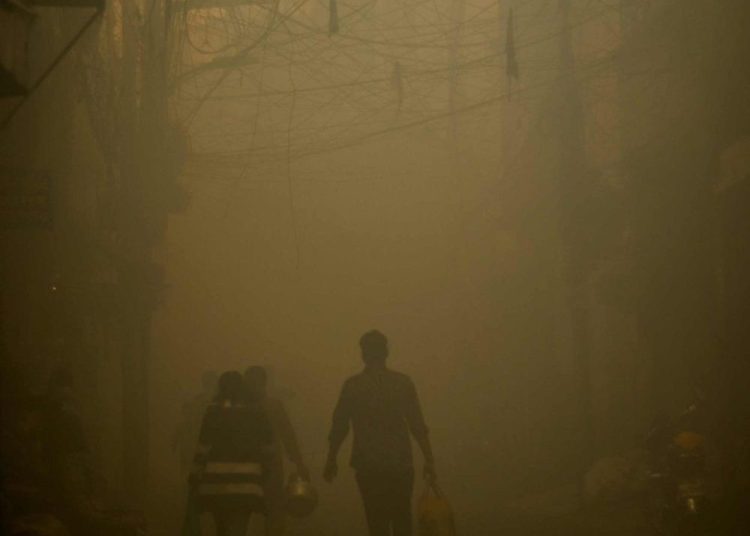
Think of Anya in Delhi. A 28-year-old software engineer, she travels by metro, avoids smoking entirely, and yet, her daily commute exposes her to PM2.5 levels vastly exceeding global safety limits. Her recent diagnosis of EGFR-positive lung cancer, despite her healthy lifestyle, is the face of this new environmental catastrophe. Data shows that in major Indian cities, the number of non-smoking lung cancer patients aged under 50 years has skyrocketed.
The scientists have reached a terrifying conclusion: Ambient air pollution specifically exposure to PM2.5 (fine particulate matter) is acting as a chemical arsonist. These microscopic particles contain polycyclic aromatic hydrocarbons (PAHs) and heavy metals. When inhaled, these toxins bypass the body’s defenses, reaching deep into the lung tissue where they cause chronic inflammation and directly damage DNA, leading to the cellular mutations seen in smoking-related cancers. It is recognised as a potent environmental carcinogen that drives the very same cellular mutations.
In this context, lung cancer is not a disease of personal fault, but a tragic, forced consequence of poor air quality and systemic environmental negligence. This urgency is compounded by indoor air pollution, where biomass fuels (wood, dung, crop residue) used for cooking and heating still cause lethal smoke exposure, disproportionately affecting women in rural areas who are often lifelong non-smokers. This research delivers the final punch: for millions around the globe, the air they breathe is now their greatest cancer risk.
The therapeutic dawn
Treatment for lung cancer caused by specific gene changes has completely changed in the last ten years, bringing real hope where there used to be none. Today, doctors have many smart and targeted ways to fight this disease.
Targeted therapies: The oral drugs are the gold standard for certain mutations — EGFR, ALK, and ROS1. Third-generation targeted therapies, such as Osimertinib, have shown superior efficacy in not only controlling disease in the lung but also penetrating the central nervous system (CNS) to effectively treat brain metastases, a common complication in these driven cancers.
Immunotherapy: For patients whose tumors are not driven by a single oncogene, Immune Checkpoint Inhibitors (ICIs) have fundamentally changed the outlook. Drugs like Pembrolizumab do not attack the cancer directly; they act like a drill sergeant, unleashing the patient’s own immune system by blocking “checkpoints” that cancer cells use to hide. Today, immune checkpoint inhibitors are standard first-line treatments, often combined with chemotherapy, providing durable remission for many.
Next-generation modalities: The pipeline continues to evolve with agents like Antibody-Drug Conjugates (ADCs). These are ‘guided missiles’ that pair a potent chemotherapy drug with an antibody that targets a specific protein on the cancer cell. This delivers the toxic payload directly to the tumor, sparing healthy tissue the epitome of precision.
Minimally invasive surgery: Modern surgical techniques, including Robotic-Assisted Thoracic Surgery (RATS), allow for precise tumour removal with smaller incisions, less pain, and significantly faster patient recovery, a major benefit for younger patients who need to resume their lives and careers.
The message and the momentum
Understanding lung cancer’s new profile means acknowledging that this disease is no longer a simple function of age or lifestyle. It is a complex intersection of genetics, systemic neglect, and environment.
The time for silence is over. This is not just a medical statistic; it is a life stolen. Our fight demands immediate action, fuelled by awareness and compassion. The message we carry must be loud and clear. Young patients should be sceptical and demand answers.
If a person is young, a non-smoker, and has a persistent cough or chest pain that lasts longer than three weeks, cancer must be on the list. If a doctor dismisses saying “you’re too young” for suspecting lung cancer, gently, but firmly, demand an explanation and ask for a low-dose CT scan or a specialist referral. We must empower ourselves and our loved ones to overcome diagnostic inertia.
The society has to end the stigma and clean the air. We must eradicate the cruel, outdated stigma that follows a lung cancer diagnosis. This disease is now primarily driven by environmental factors and genetics. And finally, we must recognise that the fight against air pollution is the fight against cancer. The data from around the world confirms that the quality of our air directly determines the health of our children’s lungs.
Why sequencing is the future
The single most critical weapon against this “new lung cancer” is next-generation sequencing (NGS). This is not optional; it is mandatory. For the young, non-smoking patient whose life trajectory has been violently interrupted, their best chance at a prolonged, quality future rests entirely on identifying that one genetic error. Next-generation sequencing and its companion, the liquid biopsy, turn a death sentence into a chronic, manageable disease by targeted therapies. We must insist that every physician and every health system makes universal molecular profiling the immediate, default standard of care for all lung cancer diagnoses, regardless of age or smoking history. Sequencing before treatment is the ultimate expression of precision medicine, and for adolescent and young adult (AYA) patients, it is the difference between an early grave and decades of life.
Featured image credit: Mohammad Samir


